01
Step 1 – Content Preparation
Source files are analyzed, segmented, and aligned with approved terminology and existing translation memory before translation begins.
Combine AI-assisted translation with professional native medical linguist review to deliver accurate, consistent, and audit-ready content across global markets.
Sesen brings together SesenGPT, translation memory, terminology control, expert human review, and structured QA for clinical, regulatory, labeling, IFU, and product content across 150+ languages.
The workflow is designed to help life sciences teams scale multilingual content while maintaining review discipline, terminology consistency, and delivery traceability.
AI-assisted translation guided by approved terminology and translation memory
Reusable language assets improve consistency across documents and markets
Professional native medical linguists review content for accuracy and context
Numbers, units, formatting, terminology, and consistency checks before delivery
Hybrid translation is a structured approach to multilingual content that combines AI-assisted translation with professional human review. In life sciences, where accuracy and consistency directly impact patient safety, regulatory approval, and product performance, this approach provides a balanced and controlled way to scale translation.
AI is used selectively within the workflow to support efficiency and consistency, not as a standalone solution. Translation memory and terminology databases guide the output, helping maintain consistent language across studies, submissions, and product documentation. This is especially important for organizations managing large volumes of recurring or updated content across multiple markets.
Professional native medical linguists remain central to the process. They review and refine all critical content, applying subject matter expertise in clinical, regulatory, and product-specific contexts. This human validation step is essential to confirm accuracy, clarity, and appropriate language usage in each target market.
The overall workflow is structured to align with regulated environments. Each step, from initial translation through review and quality checks, follows a defined process designed to support consistency, traceability, and reliable outcomes across global programs.
Hybrid translation combines the speed and consistency of AI with the judgment and subject matter expertise of professional medical linguists.
Hybrid translation at Sesen follows a defined, step-by-step workflow designed to support accuracy, consistency, and traceability across regulated life sciences content.
Each stage combines AI-assisted efficiency with expert human oversight and quality control, helping life sciences teams scale multilingual content without giving up review discipline.
Designed For
Source files are analyzed, segmented, and aligned with approved terminology and existing translation memory before translation begins.
SesenGPT generates an initial translation within a controlled workflow guided by translation memory and terminology databases.
Professional native medical linguists review and refine the content for clinical, regulatory, and product-specific accuracy.
Structured QA checks verify terminology, numbers, units, formatting, omissions, and consistency across documents and languages.
Final files are prepared with version control and traceability for submission, publication, or future content updates.
The result is a controlled hybrid translation process that improves speed and consistency while keeping professional medical linguist review at the center of regulated content delivery.
Hybrid translation is applied to the types of content life sciences organizations manage every day. The workflow is designed to support documents that require accuracy, consistency, and alignment across languages, markets, and regulatory requirements.
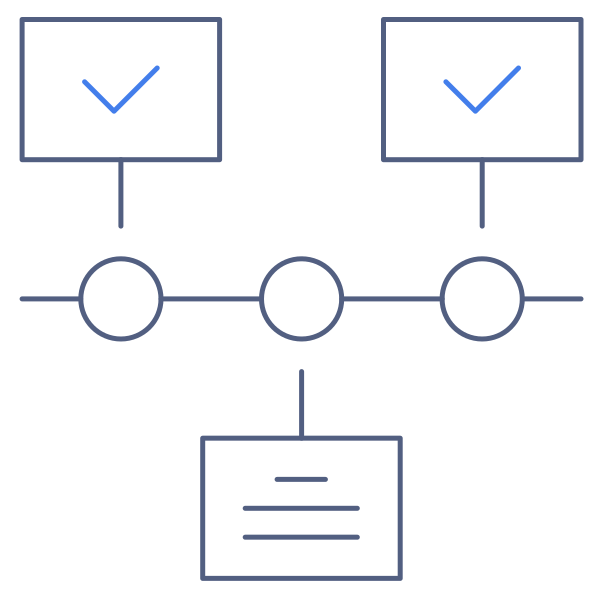
In life sciences, translation is not only about converting text between languages. It is about maintaining consistency, accuracy, and control across global content that supports clinical studies, regulatory submissions, and product use. Hybrid translation is designed to support these requirements through a structured and controlled workflow.
Terminology control is applied throughout the process using client-approved glossaries and terminology databases. This helps maintain consistent language across documents, studies, and markets, especially for critical medical and regulatory terms.
Translation memory reuse further strengthens consistency by leveraging previously approved translations. This is particularly important for organizations managing recurring content, updates, and multi-country rollouts where alignment across versions is required.
Professional human validation remains central to the workflow. Native medical linguists review and refine all critical content, applying subject matter expertise to confirm accuracy, clarity, and appropriate usage in each target language.
A structured quality assurance process is applied to identify and resolve issues before delivery. This includes checks for terminology consistency, numeric accuracy, units of measurement, formatting, and completeness across documents.
All steps are carried out within a defined workflow aligned with regulated processes. This structured approach supports consistency across projects, improves visibility into the translation process, and helps organizations manage multilingual content with greater confidence.
The goal is not just faster translation, but controlled and consistent global content.
Life sciences organizations require clear visibility into how multilingual content is created, reviewed, and updated. Hybrid translation workflows are designed to provide transparency at every stage, supporting internal quality standards and external regulatory expectations.
Full workflow visibility allows teams to understand how content moves from initial translation through review and quality checks. Each step is defined and traceable, providing clarity on how translations are produced and validated.
Version tracking is maintained throughout the process to support ongoing updates and content lifecycle management. This helps teams manage revisions efficiently while preserving alignment with previously approved materials.
Terminology traceability ensures that approved terms are consistently applied and can be referenced across documents and languages. This is especially important for maintaining consistency in clinical, regulatory, and product-related content.
Change tracking across updates provides visibility into what has been modified, reviewed, and approved over time. This supports audit requirements and helps teams manage evolving content with confidence.
These capabilities support audit readiness by providing a clear and structured record of translation activities. The result is greater transparency, improved quality oversight, and better control over global content across its lifecycle.
Hybrid translation delivers the most value in scenarios where life sciences organizations manage large volumes of content, frequent updates, and multi-language requirements. By combining structured workflows, terminology control, and professional review, it supports both efficiency and consistency across global programs.
Clinical studies often involve substantial volumes of documentation across multiple countries. Hybrid translation helps accelerate timelines by applying AI-assisted workflows and translation memory reuse, while maintaining review by professional medical linguists.
Regulatory submissions require alignment across languages and document sets. Terminology control and translation memory help maintain consistent language usage, reducing variability and supporting more reliable submissions.
Life sciences content is frequently revised as studies progress or products evolve. Hybrid workflows enable efficient updates by reusing previously approved translations and focusing review efforts on new or modified content.
Product launches and expansions into new markets require coordinated multilingual content delivery. Hybrid translation supports scalable rollout strategies by combining structured processes with consistent terminology and expert review.
The strongest value comes from combining speed, consistency, efficiency, and scalability within one controlled hybrid translation model for regulated life sciences content.
Life sciences organizations require translation partners that understand both the complexity of regulated content and the operational demands of global programs. Sesen is focused exclusively on life sciences, supporting clients with structured translation workflows designed for clinical, regulatory, and product-related content.
Sesen works with professional native medical linguists who bring subject matter expertise across therapeutic areas and document types. These linguists play a central role in reviewing and validating content, helping confirm accuracy, clarity, and appropriate language usage for each target market.
Hybrid translation workflows at Sesen are designed specifically for regulated environments. AI-assisted translation is applied within a controlled process that includes translation memory, terminology management, and structured quality assurance. This approach supports consistency and efficiency without removing expert human oversight.
Sesen has experience supporting a wide range of life sciences content, including clinical trial documentation, regulatory submissions, drug labeling, and medical device materials. This breadth of experience allows teams to apply consistent processes across different content types and stages of the product lifecycle.
Programs are designed to scale across languages and markets while maintaining control over terminology, quality, and delivery timelines. This supports organizations managing global studies, multi-country submissions, and product rollouts.
Sesen helps life sciences teams manage multilingual content with greater consistency, visibility, and control across global operations.
SesenGPT enables AI-assisted translation within a structured and controlled workflow designed for life sciences content. It is not a standalone automation tool, but part of a broader system that combines translation memory, terminology management, professional human review, and quality assurance.
The platform integrates with client-approved glossaries and terminology databases to guide translation output and maintain consistency across documents and languages. Built-in QA checks support validation of terminology, numbers, units, and formatting before content moves to final delivery.
SesenGPT is designed specifically for clinical, regulatory, and product-related content, where accuracy, consistency, and traceability are critical. It supports hybrid translation workflows that allow organizations to scale multilingual content while maintaining control over quality and compliance requirements.
AI is reshaping how global life sciences content is managed. The opportunity is not just faster translation, but better consistency, control, and scalability across markets.
Sesen helps organizations adopt hybrid translation in a way that aligns with real-world regulatory and operational requirements.
Services
Submissions, SOPs, audits, and regulated documentation.
ICFs, protocols, site documents, and patient materials.
COAs, PROs, patient questionnaires, and clinical instruments.
Medical, scientific, and technical life sciences content.
AE reports, DSURs, safety updates, and drug surveillance.
Regulated labeling and packaging for global product markets.
Instructions for Use translation for medical devices.
Device labeling for safety, compliance, and market access.
In-layout linguistic QA for packaging, IFUs, and labels.
Formatting and layout support for multilingual submissions.
Human-reviewed AI translation for regulated content.
Checks for terminology, numbers, formatting, and quality.
AI-assisted terminology extraction and consistency.
Routing, validation, terminology control, and human review.
Machine translation post-editing by medical linguists.
Clinical, medical, software, and digital health platforms.
Digital health apps, portals, and patient tools.
Video, training, voiceover, subtitling, and audiovisual content.
Multilingual voiceover and subtitles for training and communications.
Commercial, brand, and campaign translation for global markets.
Clinical, regulatory, labeling, safety, and commercialization support.
Research, genomics, gene therapy, biosimilars, and emerging therapeutics.
IFUs, labeling, software, technical documentation, and compliance content.
Clinical study operations, recruitment, site communication, and trial documents.
Patient-facing content, EHR documentation, telehealth, and care communication.
Health authority, public health, policy, and compliance-driven communication.
Public health programs, policy documents, and global health initiatives.
Digital health platforms, patient portals, eCOA, and clinical software.
Study startup, patient materials, clinical documentation, and global trials.
Submissions, labeling updates, safety documents, and compliance workflows.
Scientific exchange, publications, training, and medical communications.
Labeling, packaging, launch materials, updates, and commercialization.
Review clinical, regulatory, labeling, or AI-enabled workflow needs.
Structured multilingual workflows for regulated life sciences operations.
Multilingual support for global submissions, labeling, audits, and SOPs.
Translations for ICFs, protocols, site documents, and patient recruitment.
Specialized translations for AE/SAE reports, DSURs, and safety updates.
In-layout linguistic QA for packaging, IFUs, and labeling compliance.
Structured multilingual workflows for labeling translation, validation, and approval.
Component-based translation for IDMP, SPL, and XML content workflows.
Global communication and multilingual engagement programs.
Comprehensive support for launching products in international markets.
Culturally adapted outreach and multilingual trial communications.
Consistent scientific and brand language across markets.
Localized training for internal teams, HCPs, and external stakeholders.
Translation of websites, portals, and mobile health apps.
Sesen combines expert linguists, validation-driven review, and AI-assisted technologies to support global life sciences operations.
Proprietary AI, terminology, validation, and workflow systems for regulated multilingual content.
AI-assisted translation workflows built for regulated life sciences content.
Human-reviewed AI translation for quality, consistency, and scalability.
Automated checks for terminology, numbers, formatting, and compliance.
AI-assisted term extraction, harmonization, and reuse across global content.
Structured workflows for multilingual labeling translation, review, and validation.
AI-enabled workflows for clinical, regulatory, safety, and digital health teams.
AI-assisted multilingual support for ICFs, protocols, and patient materials.
Structured AI workflows for submissions, labeling, and compliance content.
AI-enabled workflows for AE reports, DSURs, safety updates, and drug surveillance.
AI-assisted localization for portals, apps, eCOA, and digital health platforms.
Coordinated multilingual workflows with AI routing and human review.
Start with a pilot that combines SesenGPT, professional native medical linguists, terminology control, and validation-driven QA.
Expert perspectives on AI, regulatory content, and multilingual life sciences communication.
Trends, analysis, and expert perspectives on multilingual life sciences communication.
Guidance on AI-enabled workflows, validation, terminology, and compliance.
Best practices for clinical trials, submissions, labeling, and global content operations.
Proof points, learning resources, and practical tools for multilingual content programs.
Examples of multilingual workflow support across life sciences organizations.
On-demand sessions and expert discussions on regulated multilingual operations.
Terminology resources for consistency across multilingual content programs.
Decision-support content for AI governance, quality, compliance, and translation strategy.
Detailed guidance on AI workflows, translation strategy, and global compliance.
Answers to operational, regulatory, and localization workflow questions.
Browse educational, technical, and customer-facing resources from Sesen.
Explore guidance on validation, terminology, structured content, and multilingual operations for life sciences organizations.
Mission, leadership, and values that guide Sesen’s life sciences localization work.
Regional footprint, partner ecosystem, and company updates across the industry.
A focused partner for high-stakes multilingual life sciences operations.
Sesen combines life sciences specialization, multilingual operations, and AI-enabled workflows for organizations that need quality, consistency, and scale.
Discuss enterprise translation, localization, or AI-enabled workflow needs.
Choose the right path for a new translation, localization, or AI-enabled workflow.
Get pricing and turnaround estimates for regulated multilingual content.
Speak with our team about clinical, regulatory, labeling, or AI-enabled workflows.
Evaluate SesenGPT workflows for multilingual regulated content.
Connect with Sesen for enterprise programs, partnerships, and ongoing support.
Specialized support for global life sciences teams managing regulated multilingual content.
For general inquiries, support, and company information.

Life Sciences Translation Company
Sesen helps life sciences teams manage clinical, regulatory, labeling, and AI-enabled translation workflows across 150+ languages.
Services
Life Sciences Language Services
Explore Sesen services for clinical, regulatory, labeling, medical device, software, multimedia, and global commercial content.
Featured Services
ICFs, protocols, site documents, and patient-facing materials.
Submissions, SOPs, audits, and regulated documentation.
Labeling, packaging, and product content for global markets.
Instructions for use and medical device documentation.
More Services
COA, PRO, questionnaire, and instrument workflows.
Specialized translation for medical and scientific content.
Software, portals, apps, and connected health interfaces.
Video, voiceover, subtitles, and training content localization.
Remote and onsite interpreting for life sciences settings.
Commercial, launch, and market access content for global audiences.
Need Help Choosing?
Discuss clinical, regulatory, labeling, or AI-enabled translation needs with a life sciences specialist.
Life Sciences
Life Sciences
Explore Sesen support for pharmaceutical, biotechnology, medical device, CRO, healthcare, public health, and regulated content teams.
Core Life Sciences Sectors
Healthcare & Public Sector
Specialized Domain Expertise
Study startup, patient materials, clinical documentation, and global trials.
Submissions, labeling updates, safety documents, and compliance workflows.
Scientific exchange, publications, training, and medical communications.
Labeling, packaging, launch materials, updates, and commercialization.
Trust & Compliance
Plan a Global Program
Connect with Team Sesen to review clinical, regulatory, labeling, or AI-enabled multilingual workflow needs.
Explore structured multilingual workflows for clinical, regulatory, labeling, commercial, training, and patient engagement programs.
Global submissions, labeling audits, SOPs, and regulated documentation.
ICFs, protocols, site documents, patient materials, and recruitment content.
Structured workflows for labeling translation, validation, and approval.
In-layout linguistic QA for packaging, IFUs, labeling, and compliance.
AE and SAE reports, DSURs, safety updates, and surveillance content.
Component-based translation for IDMP, SPL, and XML content workflows.
Support for launching products across international markets.
Culturally adapted outreach and multilingual trial communications.
Consistent scientific and brand language across global markets.
Localized training for internal teams, HCPs, and external stakeholders.
Websites, portals, mobile health apps, and digital patient experiences.
Sesen combines expert linguists, validation-driven review, and AI-assisted technologies to support global life sciences operations.
EXPLORE SESENGPTConnect with Team Sesen to discuss clinical, regulatory, labeling, commercial, or AI-enabled multilingual operations.
AI & Innovation
AI
Powered by SesenGPT workflowsExplore Sesen AI workflows for translation, terminology, validation, labeling, clinical trials, regulatory content, safety, and digital health localization.
Core AI Platform
AI-assisted translation workflows built for regulated life sciences content.
Human-reviewed AI translation for quality, consistency, and scalability.
Automated checks for terminology, numbers, formatting, and compliance.
AI-assisted term extraction, harmonization, and reuse across global content.
Structured workflows for multilingual labeling translation, review, and validation.
Operational AI Solutions
AI-assisted multilingual support for ICFs, protocols, and patient materials.
Structured AI workflows for submissions, labeling, and compliance content.
AI-enabled workflows for AE reports, DSURs, safety updates, and drug surveillance.
AI-assisted localization for portals, apps, eCOA, and digital health platforms.
Coordinated multilingual workflows with AI routing and human review.
Controlled AI Translation Program
Start with a pilot that combines SesenGPT, professional native medical linguists, terminology control, and validation-driven QA.
EXPLORE SESENGPTDiscuss AI Workflows
Connect with Team Sesen to discuss AI-assisted translation, terminology governance, multilingual QA, and regulated life sciences workflows.
Resources
Resources
Explore all resourcesAccess expert perspectives, proof points, learning resources, and practical tools for multilingual life sciences content programs.
Industry Insights
Trends, analysis, and expert perspectives on multilingual life sciences communication.
Guidance on AI-enabled workflows, validation, terminology, and compliance.
Best practices for clinical trials, submissions, labeling, and global content operations.
Customer & Operational Resources
Examples of multilingual workflow support across life sciences organizations.
On-demand sessions and expert discussions on regulated multilingual operations.
Terminology resources for consistency across multilingual content programs.
Strategic & Technical Resources
AI Translation Guidance
Review insights on validation, terminology, structured content, compliance, and multilingual operations for life sciences organizations.
Explore AI InsightsResource Center
Explore Sesen resources for clinical, regulatory, AI-enabled, quality, and multilingual content operations.
Learn about Sesen's mission, leadership, values, global footprint, partners, and commitment to life sciences localization excellence.
Company Foundation
Global Presence
Why Teams Work With Sesen
Sesen combines life sciences specialization, multilingual operations, and AI-enabled workflows for organizations that need quality, consistency, and scale.
Talk With Team Sesen
Connect with Team Sesen to discuss enterprise translation, localization, or AI-enabled workflow needs.
Contact
Contact
Talk with our teamChoose the right path for a new translation, localization, AI-enabled workflow, partnership, or existing project support need.
Start a Project
Get pricing and turnaround estimates for regulated multilingual content.
Speak with our team about clinical, regulatory, labeling, or AI-enabled workflows.
Evaluate SesenGPT workflows for multilingual regulated content.
Enterprise Engagement
Why Organizations Contact Sesen
General Contact Information
For general inquiries, support, and company information, connect with Team Sesen and we will route your request to the right team.