Digital Health Localization Services for eHealth, mHealth, and SaMD
Bring patient apps, clinician interfaces, medical software, connected devices, telehealth platforms, and other digital health products to global users with specialized life sciences localization.
Sesen combines professional medical linguists, terminology governance, localization engineering, in-context quality assurance, and structured multilingual workflows to help digital health teams deliver clear, consistent experiences across languages, devices, and markets.
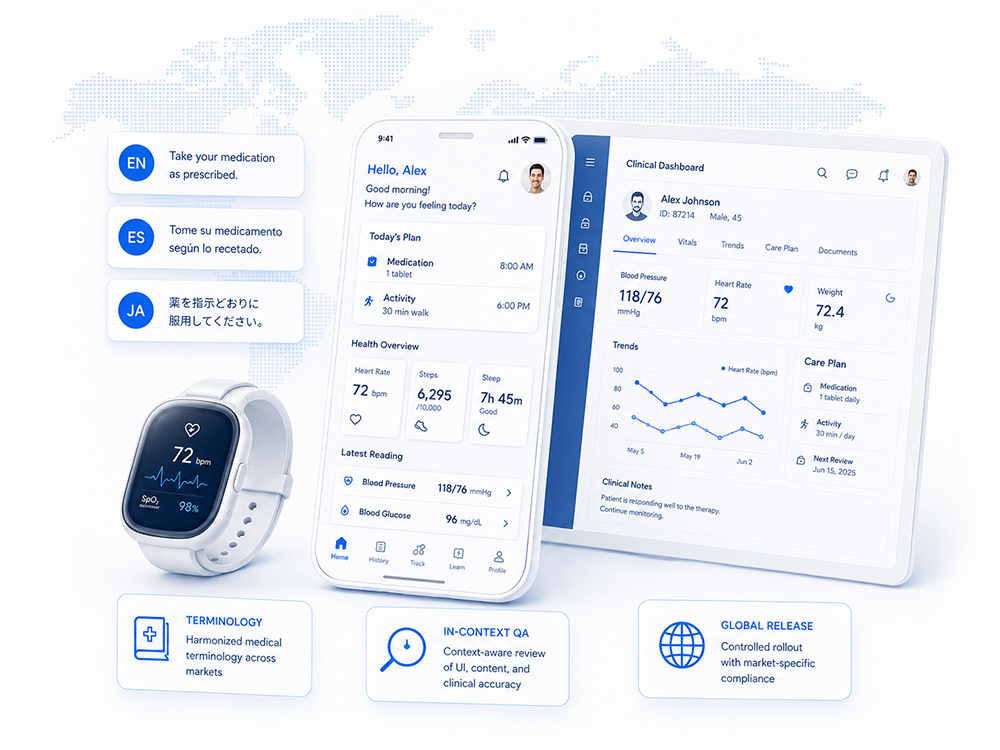
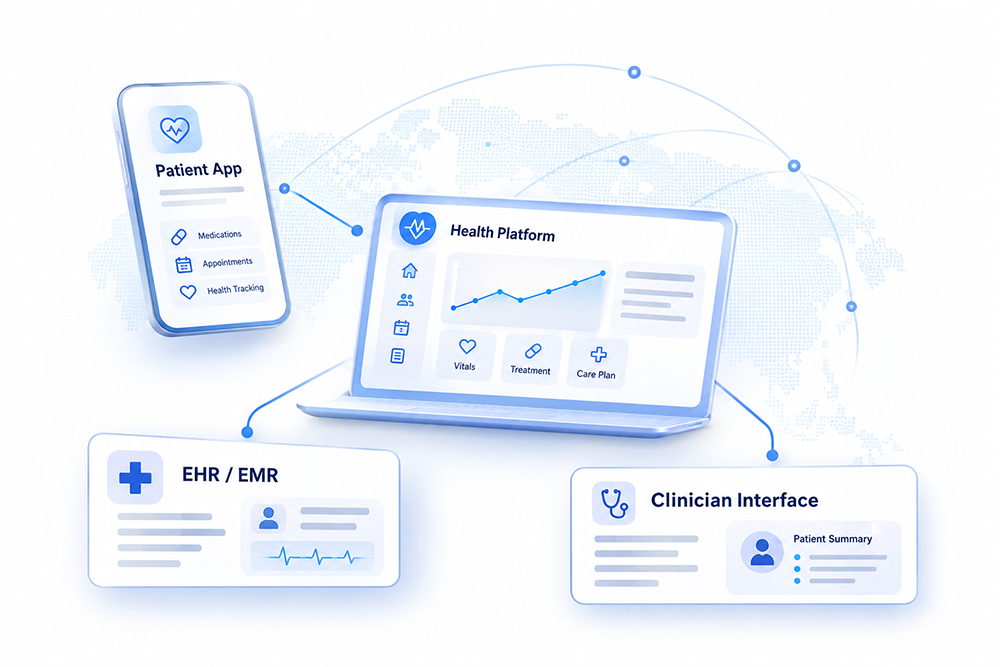
Digital health increasingly connects patients, clinicians, software, medical devices, healthcare systems, and data through a single user experience. Every screen, instruction, alert, questionnaire, notification, and workflow can become part of that experience.
Sesen helps digital health organizations localize the language layer across these connected touchpoints so clinical meaning, user comprehension, product terminology, interface behavior, and release continuity work coherently across markets.
Connected experiencesWearables, medical devices, companion apps, cloud-based health platforms
Digital Health Products We Localize
From standalone patient applications to regulated medical software and connected-care ecosystems, Sesen supports multilingual content across a broad range of healthcare technologies.
SaMD & Medical Device Software
Localization for Software as a Medical Device, device software functions, embedded interfaces, diagnostic and monitoring software, treatment-related software, and device companion applications.
Create multilingual mobile experiences for patient onboarding, medication management, symptom tracking, appointments, health information, care guidance, reminders, notifications, and support.
Mobile context · locale behavior · dynamic strings · user comprehension
Digital Therapeutics
Localize therapeutic software, treatment journeys, patient instructions, behavioral intervention content, adherence messaging, assessments, and progress information with consistent patient-facing terminology.
Support multilingual patient intake, registration, scheduling, consultation interfaces, messaging, questionnaires, care instructions, clinician workflows, follow-up, and help content.
Patient journey · clinician workflow · virtual-care communication
Clinical Platforms, Patient Portals & Digital Trial Systems
Support multilingual content across EHR/EMR-connected platforms, clinician dashboards, patient portals, clinical workflow software, eCOA/ePRO systems, and healthcare data interfaces.
A digital health product is more than buttons and menus. The same application may contain patient instructions, clinical terminology, safety information, questionnaires, device messages, educational content, and support materials.
Sesen helps organizations manage these interconnected content layers through a unified multilingual workflow, keeping approved terminology and recurring language aligned as the product evolves.
One product can contain content with very different clinical significance, review needs, and localization risk.
Interface Content
Navigation and menusButtons and labelsForms and dialogsStatus and error messages
Patient-Facing Content
Onboarding and instructionsHealth educationTreatment and adherence messagingReminders and notifications
Clinical Content
Clinical terminologyAssessments and measurementsPatient-reported informationTreatment-related content
Device & Safety Content
Warnings and precautionsDevice promptsSetup instructionsSafety-related language
Support & Release Content
Help centers and FAQsTrainingRelease notesProduct updates
Risk-Aware Localization
The Right Localization Workflow for Every Content Type
Not every string inside a digital health product carries the same clinical meaning or patient impact. Sesen can adapt translation, review, validation, and QA depth to the content's intended use, context, audience, risk, and applicable requirements.
01
Experience Content
Natural, Consistent Product Experiences
Navigation, general interface labels, help content, settings, and nonclinical notifications.
A Structured Workflow From Digital Health Product to Global Release
Effective digital health localization begins before the first string is translated and continues beyond translation itself. Sesen coordinates the linguistic, technical, contextual, and quality steps needed to move multilingual digital experiences toward release.
01
Digital Health Product
Start with the product, users, intended use, and the environments in which the content appears.
02
Content & Context
Prepare source files, screenshots, terminology, user roles, constraints, references, and existing language assets.
03
Translation & Localization
Apply qualified life sciences linguists, terminology management, translation memory, and appropriate localization technology.
04
Linguistic Validation
Use formal validation where digital products include eCOA, ePRO, questionnaires, symptom scales, or other outcome instruments.
05
In-Context QA
Review multilingual content inside screens and builds for context, truncation, variables, formatting, RTL behavior, and usability.
06
Global Release
Maintain approved language assets, versions, terminology, updates, and multilingual release continuity as the product evolves.
When digital products include validated clinical outcome instruments, the workflow can extend into formal linguistic validation and electronic-screen review.eCOA · ePRO · COA · patient questionnaires · symptom scales
Digital health localization operates at the intersection of language and software engineering. Sesen supports structured content and development workflows that help multilingual assets move efficiently through product release cycles.
Structured Localization Content
Work with formats and resources such as JSON, XML, XLIFF, YAML, CSV, iOS strings, Android resources, resource bundles, and structured exports.
Protect the Code Around the Language
Preserve and validate variables, placeholders, tags, string identifiers, markup, character limits, formatting, and other nontranslatable elements.
Mobile, Web & Cross-Platform Products
Support localization workflows for iOS, Android, web applications, React Native, Flutter, and other structured software environments.
Continuous Localization
Keep pace with incremental releases through translation-memory reuse, terminology continuity, version-aware workflows, recurring QA, and multilingual release coordination.
Modern healthcare experiences rarely exist inside a single application. Digital products may connect with EHRs, EMRs, clinical systems, patient portals, medical devices, and other healthcare platforms.
Sesen localizes the human-facing language layer within these environments—including interfaces, terminology, instructions, labels, messages, and patient- or clinician-facing content.
Support for healthcare environments using HL7 & FHIR
Sesen can manage multilingual content within environments using HL7 and FHIR (Fast Healthcare Interoperability Resources) while keeping the distinction clear: our role is language localization, not technical interoperability implementation or certification.
Validate Language Where Patients and Clinicians Experience It
A translation may be linguistically correct in isolation and still fail inside the finished product. Digital-health quality therefore extends into validation, visual context, device behavior, accessibility, and the real user experience.
Linguistic Validation for eCOA & ePRO
When digital products contain clinical outcome instruments, Sesen can support instrument-specific validation workflows, reconciliation, review, cognitive debriefing support where required, harmonization, documentation, and electronic-screen review.
Review localized mobile screens, desktop interfaces, device displays, screenshots, menus, alerts, forms, dynamic strings, and error states to identify issues that are difficult to see in isolated resource files.
Multilingual Accessibility
Account for text expansion, RTL presentation, localized labels, screen-reader-facing language, navigation text, locale formatting, and other language considerations within digital experiences designed around current WCAG accessibility guidance.
Medical terminology, patient comprehension, software context, clinical meaning, interface constraints, and product risk all require judgment. Technology supports the workflow; qualified language professionals remain central to quality.
Life Sciences Linguists
Professional linguists selected for relevant medical, clinical, technical, and life sciences expertise.
Terminology Governance
Manage approved product, medical, clinical, and brand terminology across screens, content, releases, and reviewer feedback.
Translation Memory
Reuse previously approved language where appropriate to support consistency, efficient updates, and release continuity.
AI-Assisted Workflows With Human Oversight
Use AI selectively for suitable drafting, terminology analysis, repetitive content processing, and quality checks—with expert review where medical meaning and product risk require it.
Secure Workflows for Sensitive Digital Health Content
Digital-health localization can involve sensitive healthcare, clinical, product, and patient-facing information. Sesen supports multilingual programs through controlled workflows designed for regulated and privacy-sensitive life sciences environments.
Sesen supports customers operating in environments shaped by healthcare privacy, medical-device, data-protection, and regional market requirements—including HIPAA- and GDPR-sensitive workflows and, where applicable, programs shaped by FDA medical-device/software expectations and EU MDR requirements. Localization helps address multilingual content needs within these environments; compliance of the finished product depends on the product, intended use, market, customer processes, and applicable requirements.
Structured processes for receiving, managing, reviewing, and delivering customer content.
Controlled Access
Project access managed according to workflow and customer requirements.
Version & Review Management
Maintain continuity across source revisions, translation updates, linguistic review, and multilingual releases.
Traceable Quality Workflows
Coordinate translation, terminology decisions, review, QA, and delivery through defined project processes.
Digital Health Localization in Practice
Every digital health program brings together a different mix of users, content, technology, risk, and release requirements. These common program patterns show how Sesen can combine localization, validation, QA, and release support around the needs of the product.
PATIENT EXPERIENCE
Global Patient App Launch
Challenge
A patient-facing application is expanding into multiple markets with onboarding, navigation, instructions, reminders, health information, and support content.
A digital clinical platform needs multilingual patient-reported instruments presented accurately within electronic screens and workflows.
Localization approach
Instrument-specific linguistic validation · reconciliation · cognitive debriefing support where required · screen review · documentation
Global Delivery
Digital Health Localization for Global Markets
A product designed for global patients and healthcare professionals must adapt to more than different words. Sesen supports digital health localization across 150+ languages with language- and locale-specific controls throughout the multilingual product experience.
Language & TerminologyMedical terminology · product terminology · regional variants · patient-friendly language
Interface BehaviorText expansion · character sets · line wrapping · RTL presentation · mobile constraints
Locale ConventionsDates · times · numbers · decimal separators · units · address conventions
Global ReleaseLanguage assets · regional review · version updates · terminology reuse · new-market expansion
Related Digital Health & Life Sciences Services
Digital health localization often intersects with medical-device content, clinical software, patient-reported instruments, and broader healthcare communications.
Digital health localization adapts healthcare software, mobile applications, patient portals, clinician interfaces, connected-device experiences, and related content for users in different languages and markets. A complete program can include software-resource processing, terminology management, medical linguistic review, locale adaptation, in-context QA, accessibility considerations, linguistic validation where required, and ongoing multilingual release support.
What is the difference between eHealth and mHealth localization?+
eHealth is a broad category covering digital technologies used to support healthcare delivery and health information, while mHealth focuses more specifically on healthcare experiences delivered through smartphones, tablets, wearables, and other mobile technologies. Sesen supports both within a broader digital health localization framework.
What types of digital health products can Sesen localize?+
Sesen supports patient mobile apps, SaMD, medical device software, digital therapeutics, telehealth platforms, patient portals, remote patient monitoring systems, connected devices and wearables, clinician platforms, EHR/EMR-connected applications, eCOA/ePRO systems, and clinical workflow software. The localization workflow is tailored to the product, content, users, intended use, and market requirements.
How is SaMD localization different from ordinary app localization?+
SaMD and other clinically significant medical software can contain language that affects treatment, diagnosis, monitoring, patient understanding, or safe product use. Some content may therefore require stronger subject-matter expertise, controlled terminology, deeper human review, additional QA, and more structured documentation than ordinary consumer application content.
Can Sesen localize eCOA and ePRO applications?+
Yes. Sesen provides specialized eCOA and ePRO translation and linguistic-validation support for clinical outcome assessments, patient-reported outcome instruments, questionnaires, symptom scales, diaries, and related digital clinical content. When formal validation is required, the workflow can extend beyond conventional UI localization into reconciliation, back translation, cognitive debriefing support, harmonization, documentation, and electronic-screen review as appropriate.
Does Sesen provide in-context testing for digital health applications?+
Sesen can provide linguistic and in-context QA using screenshots, localized builds, device screens, or other customer-provided product context. Review can identify truncation, incorrect context, layout issues, terminology inconsistencies, variables, date and number formatting, RTL presentation, navigation labels, alerts, and error messages. Technical product testing and software validation remain with the appropriate product or development teams unless specifically included in the agreed scope.
How does Sesen manage frequent digital health software updates?+
Sesen can support continuous and incremental localization through translation memory, terminology governance, structured software resources, version-aware workflows, recurring QA, and multilingual release coordination. Previously approved language can be reused where appropriate while new or changed content moves through the required translation and review workflow.
Can Sesen localize right-to-left languages such as Arabic?+
Yes. Localization for right-to-left languages can include linguistic translation plus in-context review of text direction, layout, navigation, interface components, numbers, mixed-direction strings, and screen presentation. Sesen can work with customer product and development teams to identify linguistic and visual issues within the localized experience.
Does Sesen support healthcare systems that use HL7 and FHIR?+
Yes. Sesen can localize human-facing content within healthcare platforms and workflows that exchange information using standards such as HL7 and FHIR. This can include interfaces, labels, terminology, patient-facing information, clinician-facing language, messages, and related multilingual content. Sesen provides language localization rather than technical HL7/FHIR implementation or interoperability certification.
How does Sesen use AI for digital health localization?+
Sesen uses AI selectively within controlled multilingual workflows. Depending on the content and project requirements, AI can assist with translation drafting, terminology analysis, repetitive content processing, and quality checks. Professional linguists and subject-matter reviewers remain central where medical meaning, patient comprehension, clinical significance, or product risk requires human judgment.
Build Multilingual Digital Health Experiences for Global Patients and Clinicians
From patient apps and SaMD to clinician platforms, connected devices, telehealth, eCOA, and digital therapeutics, Sesen helps life sciences organizations manage the language layer behind global digital health products.
A focused partner for high-stakes multilingual life sciences operations.
Built around regulated content
Sesen combines life sciences specialization, multilingual operations, and AI-enabled workflows for organizations that need quality, consistency, and scale.
AI infrastructure for multilingual life sciences content.
Explore Sesen AI workflows for translation, terminology, validation, labeling, clinical trials, regulatory content, safety, and digital health localization.
Sesen combines life sciences specialization, multilingual operations, and AI-enabled workflows for organizations that need quality, consistency, and scale.
ClinicalRegulatoryLabelingAI Workflows
Talk With Team Sesen
Discuss Enterprise Translation and Localization Needs
Connect with Team Sesen to discuss enterprise translation, localization, or AI-enabled workflow needs.