What Is Clinical Labeling and Why It Matters in Clinical Development

What Is Clinical Labeling and Why It Matters in Clinical Development

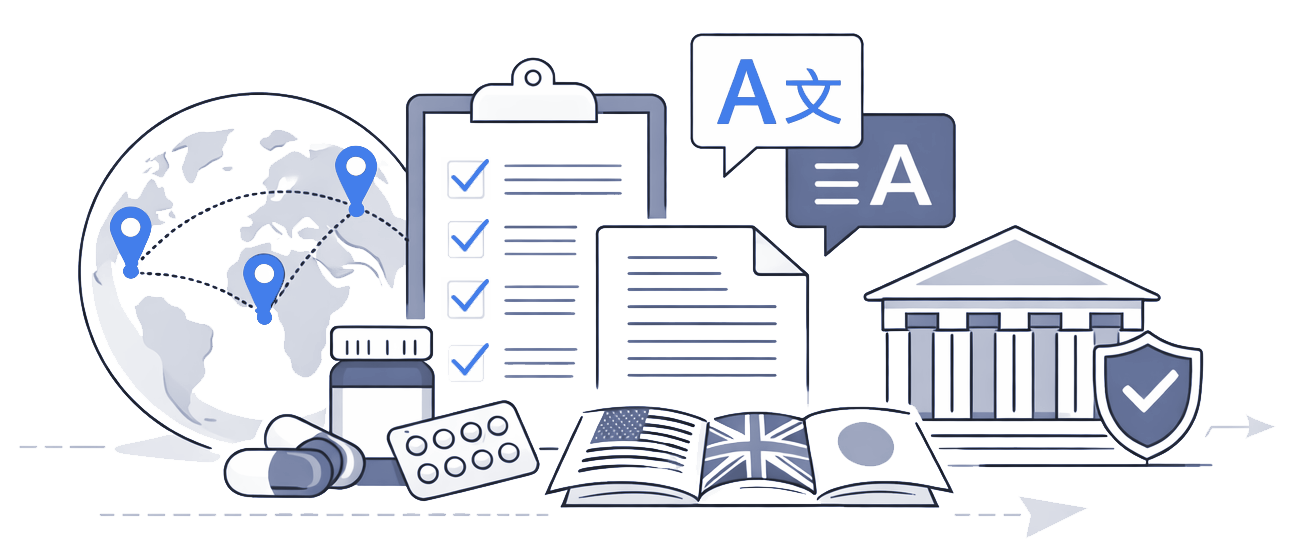
Clinical labeling refers to the translation and management of labeling content used throughout the clinical development lifecycle of a medicinal product. Unlike commercial or post-approval labeling, clinical labeling supports investigational products that are still evolving as part of active clinical programs. This includes labeling used in early feasibility studies, multi-phase global trials, protocol amendments, and late-stage development activities leading up to regulatory submission.

In global clinical development programs, labeling is not a static deliverable. Clinical labeling content is updated frequently in response to protocol changes, safety findings, study design modifications, and country- or site-specific requirements. As a result, clinical labeling translation must support continuous change while preserving consistency, traceability, and alignment across languages and trial regions.

Clinical labeling is fundamentally different from commercial and post-approval labeling in both purpose and execution. Commercial labeling typically supports approved products with stable, regulator-approved text that changes infrequently. Clinical labeling, by contrast, supports investigational products and ongoing trials where content is provisional, iterative, and closely tied to study protocols.

Clinical labeling updates are often driven by amendments rather than market strategy. Stakeholders include clinical operations, regulatory strategy, medical writing, and quality teams, all of whom rely on accurate and synchronized labeling to maintain trial integrity. Translation workflows must therefore accommodate frequent updates, parallel language releases, and rapid turnaround without compromising quality or traceability.

Errors in clinical labeling translation can have consequences well beyond the immediate study phase. Inconsistent or inaccurate labeling across languages can lead to protocol deviations, site confusion, or patient safety concerns during trials. More critically, unresolved discrepancies in clinical labeling history can surface during regulatory review or inspections, creating questions around process control, documentation integrity, and sponsor oversight.

Because clinical labeling content often feeds directly into later regulatory submissions, issues introduced early in development can carry forward into approval dossiers. Without proper version control, audit trails, and alignment between source and translated content, sponsors may face rework, delays, or additional scrutiny during inspections.

Clinical labeling plays a direct role in patient safety by supporting clear, accurate communication of investigational product information at trial sites. It also underpins trial integrity by ensuring that labeling content remains consistent with approved protocols and amendments across all regions and languages.

From a regulatory perspective, well-managed clinical labeling demonstrates control, consistency, and accountability throughout development. Regulators and inspectors increasingly expect sponsors to show not only accurate translations, but also clear traceability across versions and lifecycle stages. Clinical labeling translation that is managed with discipline and foresight supports regulatory credibility and reduces risk as programs advance toward submission.

Clinical Labeling vs Regulatory Labeling

Clinical and regulatory labeling serve different purposes across the product lifecycle. Understanding these differences is critical for managing updates, documentation, and inspection readiness during global clinical development.

Clinical labeling Regulatory labeling
Lifecycle stage Used during clinical development while the product is investigational and evolving across study phases. Used for submission and post-approval lifecycle where content is regulator-reviewed or approved and more stable.
Frequency and drivers of updates Frequent updates driven by protocol amendments, safety findings, and study or site requirements. Less frequent updates driven by regulatory actions, safety updates, or post-approval commitments.
Stakeholders involved Clinical operations, regulatory strategy, medical writing, quality, and site teams supporting trial execution. Regulatory affairs and labeling operations teams focused on compliance and market authorization.
Version control and traceability Requires strong traceability across frequent changes and multiple versions. Focuses on maintaining approved versions and controlled post-approval updates.
Inspection and audit considerations Inspectors may review labeling history to assess process control during development. Inspections typically focus on approved content and post-approval compliance.

Key takeaway:

Clinical labeling requires systems and expertise designed for ongoing change, not static content.

Clinical Labeling Content Types and Use Cases We Support

Clinical labeling spans a wide range of content types that evolve throughout the course of clinical development. Unlike static regulatory labeling, clinical labeling must adapt to changing protocols, study designs, and regional requirements while remaining consistent and traceable across languages. Sesen supports clinical labeling translation across diverse use cases, ensuring that labeling content aligns with trial operations and development timelines at every stage.

Clinical trial labels and packaging text support the safe handling, identification, and use of investigational products at trial sites. These materials often require frequent updates due to protocol amendments, dosing changes, or study expansion. Accurate and consistent translation of clinical trial labels is critical to avoid site confusion, reduce operational risk, and maintain alignment with approved study documentation across regions.

Investigational product labeling is used for products that have not yet received marketing authorization and are subject to ongoing clinical evaluation. This labeling must reflect evolving study requirements while remaining clear and unambiguous for clinical teams and trial sites. Sesen supports translation workflows that accommodate iterative updates, preserve terminology consistency, and maintain traceability across versions as investigational products progress through development phases.

Comparator and auxiliary labeling supports reference products, placebo materials, and supporting components used alongside the investigational product. These labels often need to align closely with the primary clinical labeling while reflecting distinct handling or usage instructions. Coordinated translation across investigational, comparator, and auxiliary labeling helps ensure consistency at trial sites and reduces the risk of discrepancies across related materials.

Many clinical labeling requirements are directly driven by clinical trial protocols and related documentation. Protocol-driven labeling content must remain synchronized with protocol amendments and study updates to avoid misalignment between labeling and approved trial procedures. Sesen supports structured workflows that link labeling content to protocol changes, helping clinical teams manage updates efficiently while maintaining consistency across languages and regions.

Global clinical trials often require country-, site-, or study-specific label variants to reflect local regulations, language requirements, or operational needs. Managing these variants across multiple regions and languages adds complexity to clinical labeling programs. Sesen supports translation and version control for localized clinical label variants, enabling teams to manage regional differences without losing visibility into the broader labeling lifecycle.

Labeling Across the Clinical Development Lifecycle

Labeling Across the Clinical Development Lifecycle

Clinical labeling is not a one-time activity. It is an ongoing process that evolves alongside a product as it moves through clinical development toward regulatory submission. Each phase introduces new labeling requirements, update drivers, and coordination challenges. Effective clinical labeling translation must therefore support continuity across stages while preserving consistency, traceability, and alignment with approved study documentation.

During early clinical development and pilot studies, labeling requirements are often exploratory and subject to rapid change. Labeling content may be updated frequently as study designs are refined, dosing strategies are adjusted, or new operational insights emerge. At this stage, clinical labeling translation must be flexible enough to support fast iteration while establishing a foundation of consistent terminology and reference material that can be reused as development progresses.

Clear documentation and version control during early phases are critical, as decisions made here can influence labeling content throughout the lifecycle. Maintaining accurate translation history from the outset reduces rework and supports smoother transitions into later stages.

As products move into Phase I–III trials, clinical labeling becomes more complex and operationally critical. Protocol amendments, safety findings, study expansions, and regional rollout all drive ongoing updates to labeling content. These changes often need to be implemented in parallel across multiple languages and trial sites.

At this stage, clinical labeling translation workflows must support frequent updates while preserving alignment with protocols, investigator materials, and other clinical documentation. Strong version control and traceability help ensure that all trial sites are working from the correct and current labeling, reducing the risk of inconsistencies or operational disruption.

In late-stage development, clinical labeling begins to converge with regulatory expectations. Labeling content must reflect accumulated study data and align with draft submission materials while continuing to support ongoing trials. Updates during this phase may be less frequent but carry greater regulatory significance.

Clinical labeling translation during late-stage development must balance stability with readiness for submission. Maintaining a clear and complete translation history at this stage supports internal review, quality oversight, and efficient preparation for regulatory submission without introducing last-minute rework.

The transition from clinical labeling to regulatory labeling represents a critical handoff in the product lifecycle. Clinical labeling translations often serve as the foundation for regulatory labeling content used in submissions and post-approval activities. Preserving consistency and traceability across this transition helps reduce duplication of effort and minimizes the risk of discrepancies between clinical and regulatory materials.

A lifecycle-aware approach to clinical labeling ensures that translations developed during trials can be efficiently reused and validated for regulatory purposes. This continuity supports smoother submissions, reduces cost and time to approval, and reinforces regulatory credibility.

Across all stages of clinical development, the key challenge is managing handoffs between phases without losing consistency or translation history. Clinical labeling translation that is managed with lifecycle continuity in mind enables teams to maintain control as programs evolve. By preserving terminology, version history, and alignment across phases, sponsors can support both current trial execution and future regulatory success.

Version Control, Traceability, and Inspection Readiness

Version Control, Traceability, and Inspection Readiness

Effective clinical labeling translation depends on more than linguistic accuracy. It requires disciplined version control, clear traceability, and documentation practices that stand up to internal review and external inspection. Because clinical labeling evolves continuously throughout development, the ability to manage change while preserving history is essential for reducing risk and maintaining regulatory credibility.

Clinical labeling is frequently updated in response to protocol amendments, safety findings, operational adjustments, and regional requirements. These changes are often incremental, affecting specific elements of labeling rather than entire documents. Without structured controls, incremental updates can quickly lead to inconsistencies across versions, languages, and trial sites.

A robust clinical labeling translation approach supports controlled updates by clearly identifying what has changed, where it has changed, and how those changes are reflected across languages. Managing amendments in a structured way helps clinical teams implement updates efficiently while minimizing disruption to ongoing trials.

Preserving translation history is critical for maintaining continuity throughout the clinical development lifecycle. Each version of a clinical label represents a snapshot in time that may later be reviewed during audits, inspections, or regulatory submissions. Losing visibility into how labeling evolved over time can create gaps in documentation and raise questions during review.

Clinical labeling translation that maintains a complete version history enables teams to track previous language decisions, reuse validated translations, and avoid unnecessary rework. This historical context also supports internal quality oversight and smoother transitions between development phases.

Traceability between source and target content is a foundational requirement for clinical labeling programs. It ensures that every translated label can be linked back to the corresponding source version and that changes in source content are accurately reflected in all target languages.

Clear source-to-target traceability allows sponsors to demonstrate control over their labeling processes and respond confidently to questions about how updates were managed. It also supports efficient review by enabling teams to identify exactly where changes occurred and how they were implemented across languages.

Regulators and inspectors increasingly expect sponsors to demonstrate not only accurate labeling, but also disciplined processes behind how labeling was developed and maintained. During inspections, clinical labeling history may be reviewed alongside protocols, amendments, and other study documentation to assess consistency and sponsor oversight.

Clinical labeling translation that supports inspection readiness includes well-organized version records, clear traceability, and documentation that explains how changes were managed over time. These practices help sponsors respond to inspection requests without scrambling to reconstruct labeling history after the fact.

While operational traceability and inspection preparedness are closely related, they serve different purposes. Operational traceability supports day-to-day clinical execution by ensuring teams are working with the correct and current labeling. Inspection and audit preparedness, by contrast, focuses on the ability to demonstrate process control, documentation integrity, and accountability under external scrutiny.

A mature clinical labeling translation approach addresses both needs. By supporting operational efficiency and long-term documentation requirements, sponsors can manage ongoing trials effectively while remaining prepared for audits, inspections, and regulatory review.

Our Clinical Labeling Translation Workflow

Our Clinical Labeling Translation Workflow

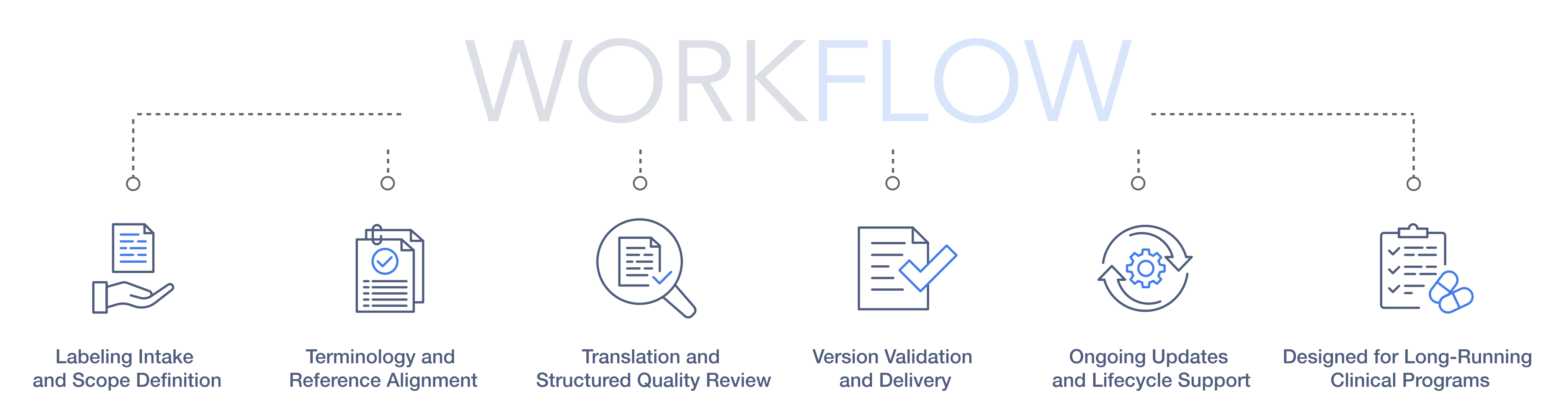
Clinical labeling translation requires a workflow that can support continuous change while maintaining consistency, traceability, and alignment with clinical documentation. Sesen’s clinical labeling translation workflow is designed to be repeatable and scalable, supporting long-running development programs from early studies through regulatory transition.

Each step in the workflow is structured to reduce risk, improve coordination, and maintain continuity as labeling evolves across phases, regions, and languages.

The workflow begins with a structured intake process that defines the scope, context, and objectives of the clinical labeling activity. This includes understanding the study phase, protocol status, target regions and languages, update drivers, and any country- or site-specific considerations.

Clear scope definition at the outset helps clinical teams align expectations, avoid ambiguity during execution, and ensure that labeling updates are implemented accurately and efficiently throughout the program.

Consistency is critical in clinical labeling, particularly when content evolves over time. Before translation begins, terminology and reference materials are reviewed and aligned to support consistency across languages and versions. This may include protocol terminology, prior clinical labeling content, and approved reference materials used across the development program.

By establishing a clear linguistic foundation early, the workflow supports reuse of validated language and reduces the risk of divergence across updates or trial regions.

Clinical labeling translation is performed by qualified linguists experienced in clinical and regulated content. Each translation undergoes structured quality review to support accuracy, clarity, and alignment with source content and reference materials.

This review process is designed to identify discrepancies early and ensure that translated labeling remains consistent with protocols and study documentation. Structured review also supports traceability by clearly documenting decisions and changes across versions.

Once translation and review are complete, labeling content is validated against the defined scope and version requirements. This step confirms that updates have been applied correctly, that version identifiers are accurate, and that all target languages reflect the intended changes.

Validated labeling content is then delivered in a controlled manner, ready for clinical use or downstream integration. Clear version identification helps ensure that trial sites and internal teams are working from the correct labeling at all times.

Clinical labeling programs rarely end with a single delivery. As studies progress, new amendments, safety findings, and operational changes often require additional updates. Sesen’s workflow is designed to support ongoing updates while preserving translation history and continuity across the lifecycle.

By treating clinical labeling as an ongoing process rather than a one-time task, the workflow supports efficient updates, reduces rework, and helps teams maintain control as programs evolve.

This workflow is intentionally designed for repeatability and scale. It supports multiple updates, parallel languages, and extended timelines without sacrificing consistency or traceability. For sponsors managing complex global trials, a disciplined and transparent workflow provides the foundation for reliable clinical labeling and smoother transitions into regulatory labeling stages.

Technology-Enabled Clinical Labeling Workspaces

Technology-Enabled Clinical Labeling Workspaces

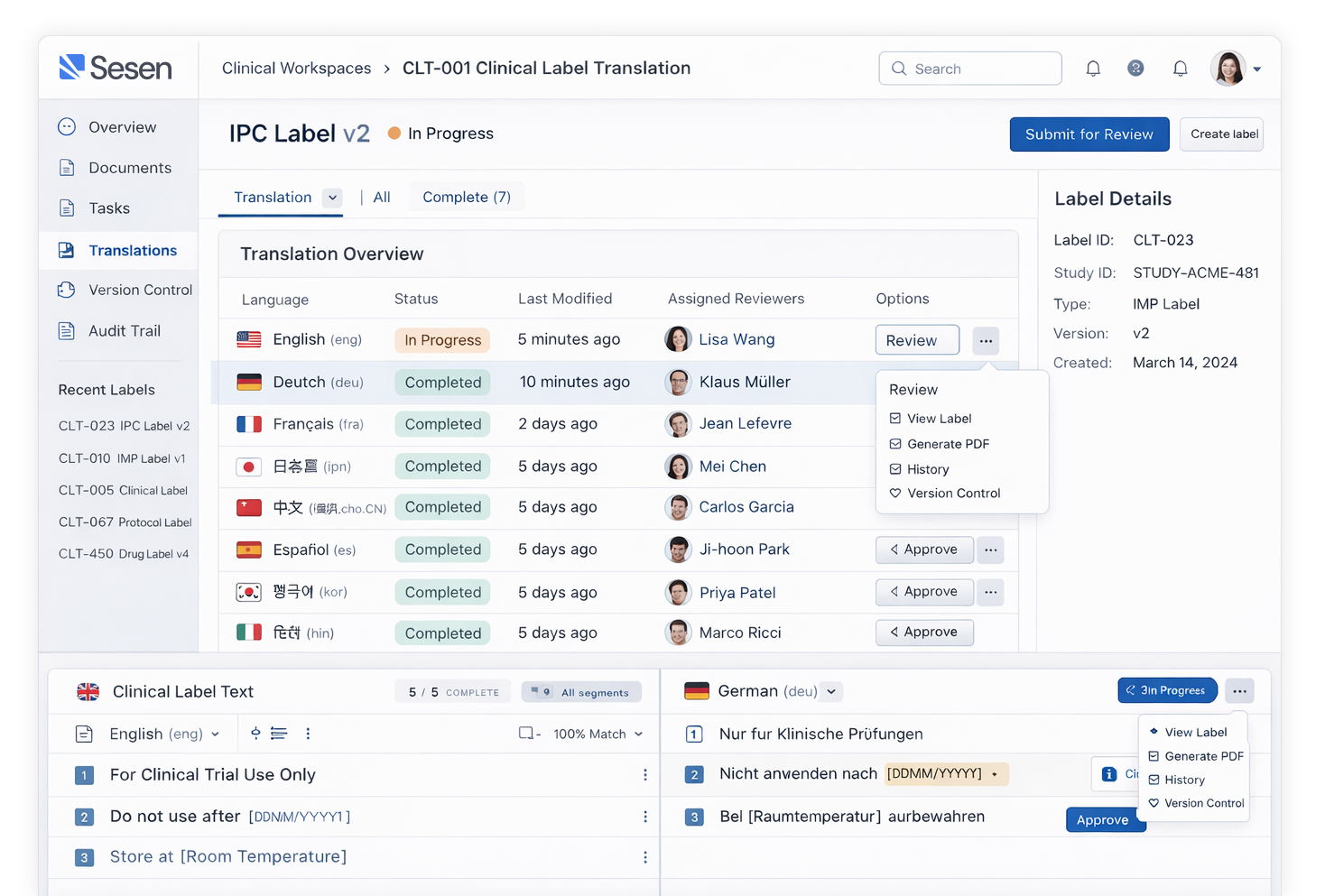
Managing clinical labeling across long-running development programs requires more than file-based workflows and manual tracking. As labeling evolves across studies, regions, and versions, teams need centralized visibility and structured controls to maintain consistency, traceability, and coordination. Technology-enabled clinical labeling workspaces support these needs by providing a controlled environment for managing labeling throughout the clinical lifecycle.

Rather than replacing established clinical processes, these workspaces act as an operational layer that brings structure, continuity, and transparency to clinical labeling activities.

Clinical labeling is most effectively managed at the product level, where all labeling activities related to a specific investigational product can be viewed in context. Product-level clinical labeling workspaces allow teams to organize labeling content by product while supporting multiple studies, updates, and versions over time.

This structure helps clinical, regulatory, and quality teams maintain a clear understanding of how labeling evolves across development phases and reduces fragmentation caused by disconnected files or email-based coordination.

Centralized access to labeling versions is essential for maintaining control in global clinical programs. A clinical labeling workspace provides a single point of reference for current and historical versions, ensuring that teams can quickly identify the latest approved labeling as well as prior iterations.

By consolidating labeling content and updates in one place, teams reduce the risk of working from outdated versions and improve coordination across regions, languages, and stakeholders.

Clinical labeling updates are often incremental, affecting specific elements rather than entire labels. Delta comparison capabilities allow teams to review changes between versions clearly and efficiently, focusing attention on what has changed rather than re-reviewing unchanged content.

This approach supports more efficient review cycles, reduces review fatigue, and helps ensure that updates are accurately reflected across all target languages and regions.

An integrated audit trail is a critical component of inspection-ready clinical labeling programs. Clinical labeling workspaces capture key actions, changes, and version transitions over time, creating a clear record of how labeling content has evolved.

This audit trail supports both day-to-day operational traceability and longer-term inspection readiness by preserving documentation that demonstrates process control and sponsor oversight.

Technology-enabled clinical labeling workspaces are not designed to replace clinical expertise or decision-making. Instead, they enable teams to apply their expertise more effectively by providing structure, visibility, and continuity across complex labeling programs.

By supporting collaboration across clinical operations, regulatory strategy, medical writing, and quality teams, these workspaces help organizations manage change with confidence while maintaining control throughout the clinical development lifecycle.

Global Language Coverage for Clinical Trials

Global Language Coverage for Clinical Trials

Global clinical trials require labeling that is accurate, consistent, and aligned across regions, languages, and study sites. As clinical programs expand internationally, clinical labeling translation must support multilingual execution without introducing fragmentation or inconsistency. Effective global language coverage is not only about translating into multiple languages, but also about coordinating updates and maintaining alignment as labeling evolves throughout development.

Clinical trials often span multiple countries and regions, each with its own language requirements and operational considerations. Clinical labeling translation must support a wide range of target languages to enable trial execution across global sites. Sesen supports multilingual clinical labeling across major and emerging trial regions, helping sponsors manage language requirements as programs scale internationally.

This global support allows clinical teams to deploy labeling efficiently across regions while maintaining control over content and updates.

Consistency in terminology is critical in clinical labeling, particularly when content is updated frequently over time. Inconsistent terminology across languages can lead to confusion at trial sites and complicate regulatory review later in the development lifecycle.

Clinical labeling translation that maintains consistent terminology across languages and updates helps ensure that investigational product information is communicated clearly and accurately. By preserving linguistic consistency over time, teams can reduce rework, support internal review, and maintain alignment across study materials.

When clinical labeling updates are required, changes often need to be implemented simultaneously across multiple languages. Coordinating parallel multilingual updates adds complexity, especially when updates are frequent or time-sensitive.

A structured approach to multilingual labeling coordination helps ensure that updates are applied consistently across all target languages and regions. This coordination reduces the risk of discrepancies between languages and supports synchronized trial execution across global sites.

Clinical labeling translation must align with both global development strategies and region-specific trial requirements. Some studies require standardized global labeling, while others require localized adaptations to meet regional or site-specific needs.

By supporting both global and regional clinical trial strategies, clinical labeling translation enables sponsors to balance consistency with flexibility. This approach helps teams manage regional variation without losing visibility or control over the broader labeling lifecycle.

Quality, Compliance, and Risk Management

Quality, Compliance, and Risk Management

Clinical labeling translation operates within a highly controlled environment where accuracy, consistency, and documentation quality directly affect trial execution and regulatory confidence. Effective quality and risk management practices are essential for ensuring that clinical labeling supports patient safety, operational integrity, and inspection readiness throughout the development lifecycle.

Clinical labeling requires translators who understand not only language, but also the clinical and regulatory context in which labeling is used. Qualified linguists with experience in clinical trials and regulated content are better equipped to interpret protocol-driven requirements, handle specialized terminology, and recognize the implications of even minor wording changes.

By working with linguists who have relevant clinical and regulatory experience, clinical labeling translation programs reduce the risk of misinterpretation and support consistency across studies, languages, and versions.

Quality in clinical labeling translation is supported through structured review processes designed to identify discrepancies early and maintain alignment with source content and reference materials. Consistency checks help ensure that terminology, phrasing, and formatting remain aligned across languages and successive updates.

Structured quality review also supports traceability by documenting review outcomes and language decisions, which can be referenced during internal audits, inspections, or later stages of development.

Sponsors are increasingly expected to demonstrate clear oversight of labeling activities during clinical development. Clinical labeling translation that aligns with sponsor quality expectations supports internal governance and reduces risk during inspections.

During audits or inspections, labeling history, version records, and review documentation may be examined to assess process control and consistency. Well-documented quality practices enable sponsors to respond confidently to information requests and demonstrate disciplined management of clinical labeling activities.

Risk in clinical labeling often arises from uncontrolled changes, inconsistent updates, or gaps in documentation. Disciplined labeling processes help mitigate these risks by establishing clear controls around versioning, review, and delivery.

By applying structured workflows, quality checks, and traceability throughout the clinical labeling lifecycle, teams can reduce the likelihood of errors, minimize rework, and maintain confidence as programs progress toward regulatory submission.

quality-compliance-and-risk-management

Transitioning From Clinical to Regulatory Labeling

The transition from clinical labeling to regulatory labeling is a critical point in the product lifecycle. Decisions made during clinical development directly influence the efficiency, accuracy, and readiness of regulatory submissions. A well-managed transition helps sponsors reduce rework, maintain consistency, and move into submission with confidence.

Clinical labeling translations developed during trials often form the foundation for regulatory labeling content. When clinical labeling is managed with consistency and traceability in mind, validated translations can be reused or adapted rather than recreated from scratch.

Reusing validated clinical translations helps preserve linguistic consistency, reduces duplication of effort, and shortens timelines as products move toward submission. It also minimizes the risk of introducing discrepancies between clinical and regulatory materials.

Rework is one of the most common and costly challenges during regulatory submission preparation. Inconsistent terminology, missing version history, or poorly documented updates from the clinical phase can require extensive reconciliation later.

By maintaining disciplined clinical labeling processes throughout development, sponsors can significantly reduce the amount of rework required during regulatory preparation. Clear version control and translation history enable regulatory teams to build on existing content rather than resolve avoidable issues under tight submission timelines.

Continuity across development and approval stages supports both operational efficiency and regulatory credibility. When clinical labeling translation aligns with regulatory expectations from the outset, the transition into regulatory labeling becomes smoother and more predictable.

Maintaining continuity helps ensure that labeling content reflects the full development history of the product and supports consistent communication across clinical and regulatory stakeholders. This lifecycle-aware approach strengthens submission readiness and supports long-term labeling management after approval.

Treating clinical and regulatory labeling as disconnected activities increases risk and inefficiency. A lifecycle-aware approach recognizes that clinical labeling is an integral part of the broader labeling strategy and should be managed with the end goal in mind.

By supporting clinical labeling with future regulatory needs in view, sponsors can streamline submission preparation, reduce cost, and improve overall program execution.

Why Life Sciences Teams Choose Sesen

Why Life Sciences Teams Choose Sesen

Life sciences organizations operate in highly regulated, fast-moving environments where accuracy, consistency, and accountability are critical. Teams choose Sesen because of a focused approach to clinical and regulatory translation that supports complex programs across the full development lifecycle.

Sesen specializes exclusively in life sciences translation and localization. This focus allows teams to work with a partner that understands the scientific, clinical, and regulatory context in which labeling and trial materials are used. Rather than applying generic translation workflows, Sesen aligns services to the realities of clinical development, where content evolves continuously and errors carry significant downstream risk.

This specialization supports higher consistency, clearer communication, and greater confidence for clinical and regulatory stakeholders.

Clinical labeling translation is closely tied to clinical development workflows, including protocol management, amendments, safety updates, and trial execution across regions. Sesen’s experience supporting clinical programs enables teams to integrate labeling translation smoothly into existing processes without disruption.

By understanding how clinical teams operate and how labeling fits into broader development activities, Sesen helps sponsors manage updates efficiently while maintaining alignment with study documentation and operational timelines.

Sesen approaches clinical labeling as part of a continuous lifecycle rather than a series of isolated tasks. From early development through regulatory submission and beyond, services are designed to preserve consistency, translation history, and traceability across phases.

This lifecycle-oriented approach helps reduce rework, supports smoother transitions between clinical and regulatory stages, and enables teams to build on validated content as programs advance. Clients benefit from continuity and institutional knowledge that carries forward over time.

As clinical programs expand globally, labeling requirements become more complex. Sesen supports scalable clinical labeling translation across regions and languages, helping teams manage growth without losing control or visibility.

Scalable support enables life sciences teams to adapt to new studies, regions, and regulatory requirements while maintaining consistency and quality across the program. This flexibility is essential for organizations managing long-running and multinational clinical trials.

Frequently Asked Questions About Clinical Labeling Translation

Clinical labeling translation refers to the translation and management of labeling content used during the clinical development of investigational products. This includes labeling that supports clinical trials, study operations, and investigational product handling prior to regulatory approval. Unlike post-approval labeling, clinical labeling evolves continuously in response to protocol amendments, safety findings, and study design changes, requiring strong version control and traceability across languages and updates.

Frequent updates are a core characteristic of clinical labeling. Effective clinical labeling translation relies on structured workflows that support incremental changes while preserving consistency across versions and languages. Updates are managed by clearly identifying changes, aligning them with current protocols and reference materials, and applying them consistently across all required languages. Maintaining clear version history and traceability helps teams implement updates efficiently without disrupting ongoing trials.

Yes. When clinical labeling translations are managed with consistency and traceability in mind, validated clinical translations can often be reused or adapted for regulatory submissions. Reuse helps reduce duplication of effort, shortens submission timelines, and preserves linguistic consistency between clinical and regulatory materials. A lifecycle-aware approach to clinical labeling supports a smoother transition into regulatory labeling and post-approval activities.

Inspection and audit readiness are supported through disciplined version control, clear source-to-target traceability, and well-documented labeling history. Clinical labeling translation processes are designed to preserve records of changes, reviews, and approvals over time. This documentation enables sponsors to demonstrate process control, consistency, and oversight during inspections, without the need to reconstruct labeling history retroactively.

Global clinical trials often require labeling in multiple languages across diverse regions. Clinical labeling translation supports multilingual execution by maintaining consistent terminology and synchronized updates across all target languages. This coordinated approach helps ensure that trial sites worldwide receive accurate and aligned labeling while supporting both global and region-specific clinical trial strategies.

Start Your Clinical Labeling Program with Confidence

Lifecycle-ready clinical labeling translation to support global clinical trials, evolving study requirements, and regulatory transition.