Medical Device Labeling Translation Services

Translate, format, review, and maintain multilingual medical device labeling with the terminology control, linguistic precision, and lifecycle consistency required for global products.

Sesen provides specialized medical device labeling translation services for device labels, packaging, Instructions for Use (IFUs), electronic IFUs, UDI-related content, safety information, and digital labeling across 150+ languages. Our workflows combine professional medical-device linguists, terminology governance, multilingual artwork support, in-context linguistic QA, and AI-assisted quality controls to help global teams keep labeling accurate and consistent from product launch through ongoing updates.

Medical Device Specialization
ISO 17100 · ISO 9001 · ISO 13485
150+ Languages
Professional Human Review
Labeling & In-Context QA

Connected Labeling

Medical Device Labeling Is Connected Product Content

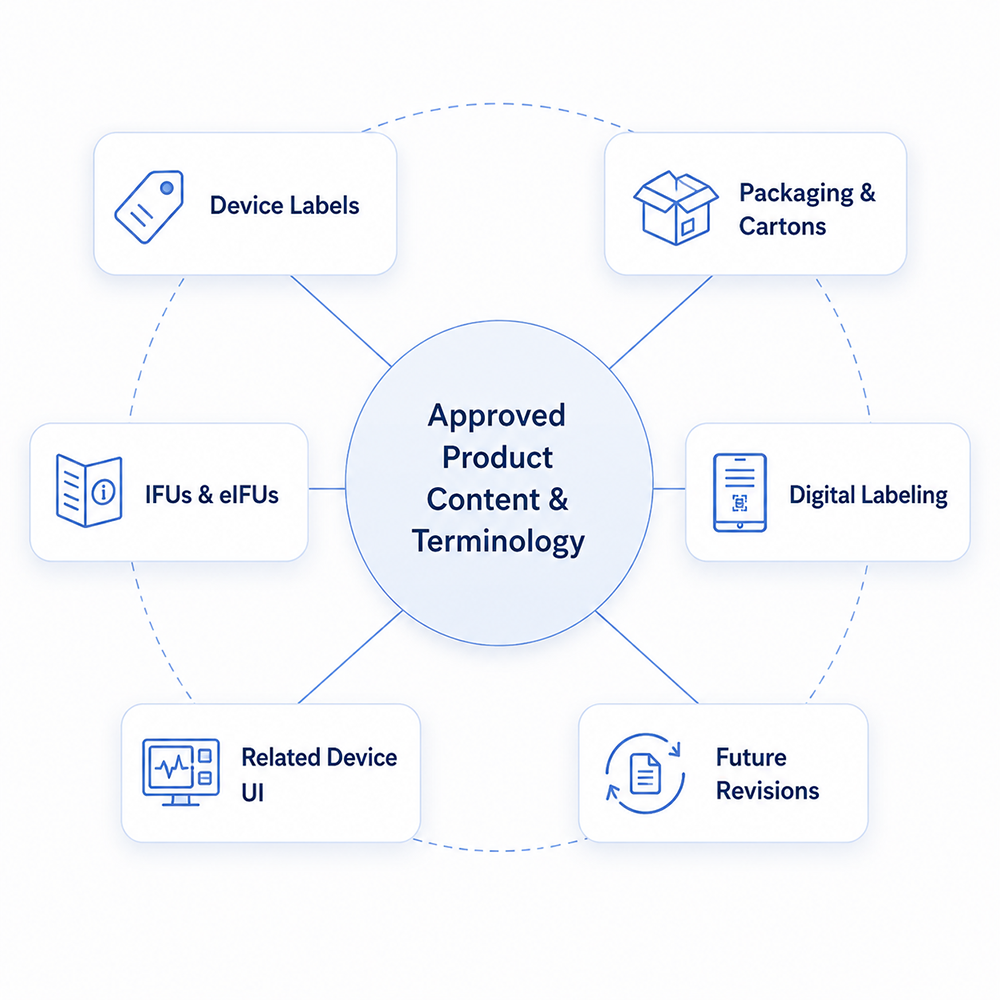
Medical device labeling rarely exists as a single document. The same device name, warning, instruction, technical term, measurement, or safety statement may appear across multiple product touchpoints.

Each asset has its own format and purpose, but the underlying product information must remain aligned. Sesen approaches medical device labeling translation as a connected multilingual content system—helping organizations maintain controlled terminology and meaning across labeling touchpoints while accommodating the space, format, usability, and market-specific requirements of each asset.

Managing these relationships together can reduce terminology drift, inconsistent warnings, duplicated review effort, and avoidable discrepancies between related product materials.

Explore Labeling Translation Services
Medical Device Labeling Is Connected Product Content

Medical Device Labeling Content We Translate

Sesen supports multilingual labeling across physical, digital, user-facing, and lifecycle content for medical devices and diagnostic products.

On-Product Labels

Translate concise, space-sensitive content while preserving technical meaning, safety information, and product identification.

  • Device labels and nameplates
  • Product and model information
  • Warnings and precautions
  • Safety statements
  • Operating and handling information
  • Control and component labels
  • Storage and environmental information
  • Symbols and associated explanatory text

Packaging & Product Identification

Maintain accurate multilingual content across cartons, inserts, packaging, and structured product-identification elements.

  • Primary and secondary packaging
  • Outer cartons and packaging inserts
  • Model and catalog information
  • Storage and handling instructions
  • Product identifiers
  • Manufacturer and market-specific information
  • UDI-related multilingual labeling content
  • Barcode-adjacent and variable-data content

Instructions & User Information

Support detailed device instructions while keeping terminology aligned with labels, packaging, and other approved product content.

  • Instructions for Use (IFUs)
  • Directions for Use (DFUs)
  • User and operator manuals
  • Quick-reference guides
  • Installation instructions
  • Maintenance and service instructions
  • Troubleshooting information
  • Warnings, cautions, procedures, tables, and diagrams
Explore IFU Translation Services

Electronic & Digital Labeling

Support controlled multilingual content as product information moves from paper into electronic and structured delivery formats.

  • Electronic Instructions for Use
  • Web-based product instructions
  • Electronic labeling
  • PDF, HTML, and XML content
  • Structured multilingual product information
  • Online user documentation
  • Digital instructions and help content
  • Selected device UI content tied to approved labeling

Labeling Updates & Lifecycle Content

Maintain multilingual labeling as products, markets, safety information, and presentation formats evolve over time.

  • Product launch labeling
  • New-language rollouts
  • Country and market expansion
  • Product and design changes
  • Safety and regulatory labeling updates
  • New models and SKUs
  • Packaging redesigns
  • eIFU migration and periodic maintenance

Maintain Consistency Across Every Labeling Touchpoint

A safety warning should not communicate one meaning on a carton and another in the IFU. A device component should not acquire different names because it appears in separate files.

Sesen can use approved terminology, client glossaries, translation memory, product naming conventions, reviewer decisions, prior approved translations, and reference materials to maintain continuity across related labeling assets and successive releases.

Consistency does not mean forcing identical wording everywhere. A short device label, a detailed IFU, and a software display may require different formulations. The goal is controlled terminology, accurate meaning, and an intentional relationship between each touchpoint.
01
Approved TerminologyClient terminology, nomenclature, approved translations, and reference content establish a controlled linguistic foundation.
02
Device LabelSpace-sensitive product and safety language remains aligned with the approved terminology system.
03
PackagingCartons and inserts preserve the same product concepts while adapting to packaging context.
04
IFU / eIFUDetailed instructions reuse approved concepts while allowing the language needed for usability and procedure.
05
Digital / Related UISelected digital and interface content stays consistent with product labeling where the same concepts recur.
06
Future RevisionApproved language and reviewer decisions can carry forward as products and markets evolve.

From Source Content to Final Label

Medical device labeling quality depends on more than translated text. Language must remain accurate after it enters the final label, carton, insert, IFU, or electronic format.

Sesen supports a controlled workflow from source preparation through final-context linguistic review, with review depth configured around content risk, client requirements, languages, and project scope.

01

Source & Terminology Preparation

Source files, approved terminology, existing translations, product references, translation memory, style requirements, and project instructions are aligned before multilingual production begins.

02

Specialized Medical Device Translation

Professional linguists with relevant medical-device, technical, clinical, or regulatory expertise translate the content for its intended audience and use.

03

Independent Review & Linguistic QA

Review focuses on meaning, completeness, terminology, readability, warnings, instructions, numbers, units, and source-target consistency.

04

Multilingual Artwork & DTP

Translated content is placed into labels, cartons, inserts, manuals, IFUs, and other required production formats while accounting for text expansion and script-specific layout needs.

05

In-Context Linguistic QA

Language is reviewed within final or near-final layout to identify truncation, placement, rendering, line-break, terminology, and visual-context issues that may not be visible in a bilingual file.

Explore Label Review & In-Context QA
06

Final Delivery & Version Control

Approved multilingual files are delivered in the required formats, with terminology, translation memory, reviewer decisions, and relevant history retained to support future updates where appropriate.

1Text fit & wrapping
2Warning placement
3Identifier integrity

Quality Checks Where Language Meets the Final Label

Medical device labels create localization constraints that ordinary documents do not. Limited physical space, text expansion, multiple languages, complex scripts, symbols, identifiers, and fixed artwork can all affect how correct language performs in context.

A linguistically accurate sentence can still become problematic after layout. Sesen's final-format linguistic QA can help identify issues before final delivery or release.

Missing or truncated text
Incorrect line breaks
Source-target discrepancies
Inconsistent terminology
Number or unit discrepancies
Altered product identifiers
Misplaced warnings or instructions
Text expansion and crowding
Symbol-to-text alignment
Incorrect fonts or character rendering
Right-to-left layout issues
CJK typography problems
Inconsistent content across related SKUs
Version discrepancies
Formatting that changes or obscures meaning

This review focuses on linguistic accuracy and content integrity in final context. Regulatory approval and final labeling compliance remain the responsibility of the manufacturer and its designated regulatory teams.

Protect Product Identification Through Multilingual Labeling

UDI, model information, product codes, barcodes, dates, measurements, and other structured data require a different localization approach from ordinary prose.

Some elements need translation. Others must remain exactly as supplied. Sesen applies controlled workflows designed to distinguish between the two while preserving the relationship between identifiers and surrounding multilingual text.

Translate what should change. Protect what should not.

Translate & Review

  • Product descriptions
  • Warnings and explanatory language
  • Storage and handling text
  • Associated labeling instructions
  • Market-specific information where applicable

Preserve & Verify

  • UDI and controlled identifiers
  • Model and catalog numbers
  • Serial or lot-related fields
  • Barcodes and variable data
  • Numbers, dates, and units as specified

Manage Medical Device Labeling Across the Product Lifecycle

The first multilingual launch is only one stage of a global labeling program. Products change, markets are added, safety information evolves, packaging is redesigned, new models appear, and digital delivery expands.

Sesen helps medical device companies manage controlled multilingual change while retaining approved terminology, reviewer decisions, and reusable content over time.

01

Product Launch

Coordinate complete multilingual labeling sets for simultaneous or phased introductions across launch markets.

02

Market Expansion

Add countries and languages while preserving approved terminology, prior reviewer decisions, and established product language.

03

Product & Design Changes

Update affected multilingual content while avoiding unnecessary retranslation of previously approved material.

04

Safety & Regulatory Updates

Coordinate revised warnings, precautions, instructions, and other changed product information across affected languages and assets.

05

Digital & eIFU Migration

Maintain multilingual content continuity as approved information moves into electronic or structured formats.

06

Ongoing Label Maintenance

Retain terminology, translation memory, reviewer feedback, and version history across recurring labeling revisions.

Medical Device & IVD Labeling Programs

Sesen supports labeling translation for a broad range of medical technologies, from focused product-label projects to multilingual systems involving devices, software, diagnostics, user instructions, and multiple product configurations.

Medical Devices

Our teams support labeling for diagnostic and therapeutic devices, surgical and procedural products, imaging systems, monitoring equipment, connected devices, patient-use products, professional-use systems, laboratory equipment, and complex product families.

Workflows are configured according to terminology, intended audience, content risk, file format, and review requirements rather than treating every device category the same.

In Vitro Diagnostics

IVD labeling may combine scientific terminology, specimen information, warnings, operating instructions, performance-related concepts, product identification, packaging, and detailed IFUs.

Sesen supports multilingual IVD labels, packaging, IFUs/eIFUs, and related product information while maintaining terminology continuity across diagnostic content.

Explore IVD Translation Services

Support for Global Medical Device Labeling Programs

Medical device labeling requirements vary by market, device, intended user, product configuration, and regulatory pathway. Successful global programs therefore require more than translating a source label into a standard list of languages.

Sesen works with medical device organizations to implement multilingual workflows around manufacturer-defined market and regulatory requirements. Specific legal and regulatory determinations remain with the manufacturer's regulatory team; Sesen builds the multilingual workflow around those requirements and approved references.

Explore Regulatory Translation Services
U.S. FDA

Support multilingual content workflows for global device programs that coexist with U.S. labeling requirements, including labels, packaging, instructions, safety content, and UDI-related information.

EU MDR

Under the EU Medical Device Regulation, information supplied with a device must be provided in the official Union language or languages determined by the Member State in which the device is made available. Sesen supports multilingual labels, IFUs, packaging, user information, and recurring updates across European markets.

EU IVDR

Support multilingual IVD labeling and IFU workflows while coordinating scientific and diagnostic terminology across related content.

Electronic IFUs

The EU eIFU framework permits electronic rather than paper Instructions for Use for MDR devices intended for professional users when the applicable conditions are met. Where professional-use devices may also reasonably be used by lay persons, instructions intended for those lay users remain subject to paper requirements. Sesen supports the multilingual content, structured formats, terminology, version management, and linguistic QA for eIFU programs.

Additional Markets

Support medical device labeling across 150+ languages for programs spanning North America, Europe, Asia-Pacific, Latin America, the Middle East, Africa, and other international markets.

Quality Controls for Safety-Critical Device Labeling

Labeling content often combines short text with disproportionately high consequences. One number, warning, direction, or terminology error can affect multiple assets and markets.

Terminology Control

Approved medical, technical, product, and safety terminology is managed through glossaries, termbases, translation memory, and reference content.

Numeric & Unit Verification

Numbers, measurements, dates, units, codes, and other structured elements can be checked systematically alongside human linguistic review.

Warning & Instruction Review

Warnings, cautions, contraindications, procedures, and operating instructions receive focused review for meaning and consistency.

Cross-Asset Consistency

Related language can be compared across labels, cartons, IFUs, eIFUs, digital content, and product variants to reduce unintended discrepancies.

Layout & Rendering QA

Final-context review addresses text expansion, clipping, font behavior, complex scripts, and visual relationships that can affect meaning.

Version & Change Control

Previously approved multilingual content can be separated from changed content so reviewers can focus attention where it is needed.

Quality Infrastructure for Regulated Medical Device Content

Sesen combines specialized life sciences expertise with certified quality systems and controlled multilingual processes.

ISO 17100 Certified

Certified translation-services processes support structured translator qualification, review, workflow management, and quality assurance.

ISO 9001:2015 Certified

Quality-management processes support repeatable operations, continuous improvement, and disciplined controls across multilingual programs.

ISO 13485:2016 Certified

Sesen's quality infrastructure includes a quality-management framework relevant to organizations and workflows serving the medical-device environment.

Professional Medical Linguists

Projects are matched with professional native-language linguists based on language pair, subject matter, content type, and intended audience.

Structured Review & QA

Translation, bilingual review, terminology management, automated QA, formatting checks, and client review can be configured around program needs.

Secure AWS-Hosted Infrastructure

Secure project and content infrastructure supports controlled multilingual operations, file handling, and enterprise program management.

ISO certification supports Sesen's quality infrastructure and process discipline; it does not replace the manufacturer's regulatory review or constitute certification of an individual label's compliance.

AI-Assisted Workflows With Professional Human Review

Medical device labeling contains exactly the type of content where technology can be highly useful—and where uncontrolled automation can introduce unacceptable risk.

Sesen uses AI and language technologies to strengthen defined parts of the multilingual workflow while retaining professional human review for regulated labeling content.

Technology supports consistency, visibility, reuse, and efficiency. Professional medical linguists remain responsible for final linguistic quality.
Terminology IntelligenceIdentify recurring medical, technical, and product terminology and compare translated content against approved resources.
Translation Memory & ReuseIdentify relevant previously translated content to help maintain consistency across product families, markets, and revisions.
Version ComparisonHelp distinguish changed from unchanged content so teams can focus attention on the portions that have actually been updated.
Numeric & Consistency QASupport checks for numbers, units, repeated language, terminology, missing content, and selected formatting patterns.
AI-Assisted TranslationFor appropriate content and client-approved workflows, SesenGPT can support controlled translation assistance within a professional-review process.
Expert Human ValidationProfessional medical linguists review regulated labeling for meaning, terminology, readability, and contextual accuracy before final delivery.

Coordinate Complex Multilingual Labeling Programs

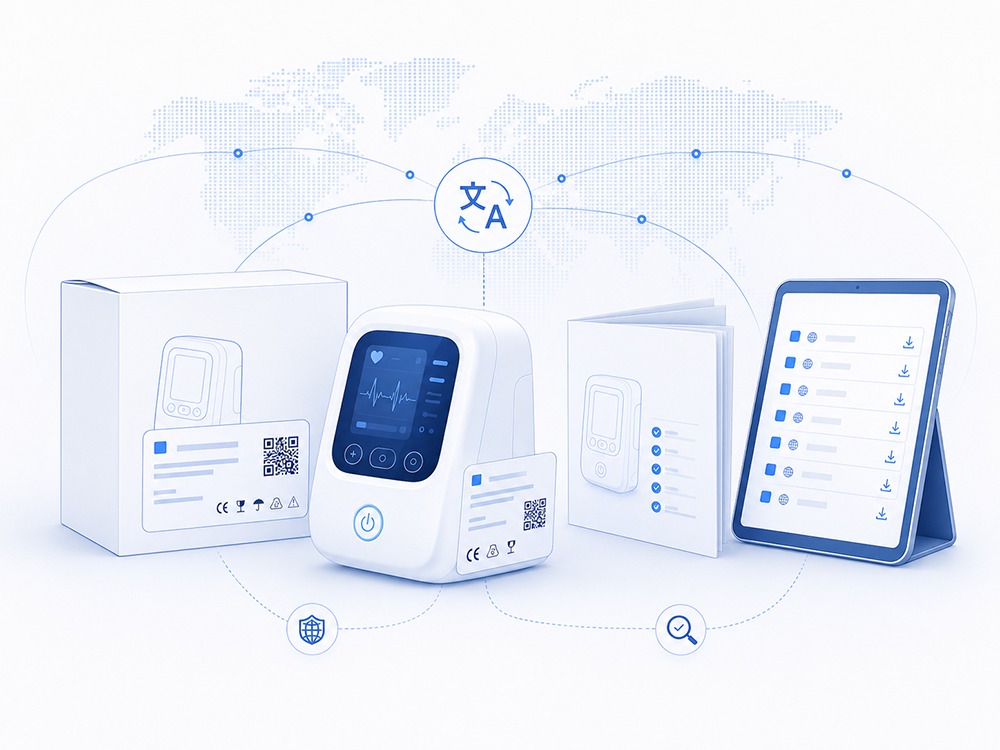
A global device manufacturer may be managing many languages, product families, SKUs, regional variants, packaging configurations, reviewer groups, source formats, and recurring changes at the same time.

Sesen provides centralized multilingual program support designed for that complexity, from one-time labeling projects to ongoing enterprise programs.

150+ Languages Global language support for launches, expansion, recurring revisions, and connected product-content programs.

Multiple Products & SKUs

Coordinate shared terminology while maintaining the distinctions required between products, models, configurations, and generations.

Global Language Rollouts

Manage simultaneous or phased translation across 150+ languages according to launch timing and market priorities.

Reviewer Coordination

Capture and apply client and in-country reviewer feedback consistently rather than allowing decisions to remain fragmented across individual files.

Multilingual Artwork Management

Coordinate translation with labels, cartons, IFUs, inserts, and other production files so language and layout workflows remain connected.

Recurring Updates

Reuse approved content and terminology across revisions while isolating new or modified content for focused translation and review.

Centralized Project Coordination

One Sesen program team can coordinate languages, files, terminology, schedules, reviewers, DTP, QA, and delivery across complex initiatives.

Built for Complex Global Medical Device Labeling

Medical device labeling translation requires more than language coverage. It requires an understanding of how product information moves across content, formats, markets, and time.

Medical Device Specialization

Regulated medical, technical, labeling, safety, and user-facing device content supported by specialized life sciences teams.

Connected Terminology

Maintain product meaning across labels, packaging, IFUs/eIFUs, digital content, related device UI, and successive revisions.

Translation Through Final Artwork

Support can extend from specialized translation and review through multilingual DTP and final-context linguistic QA.

Controlled Change Management

Translation memory, terminology resources, version comparison, and reviewer history support recurring updates and market expansion.

ISO-Certified Quality Infrastructure

ISO 17100, ISO 9001, and ISO 13485 certifications support structured, repeatable multilingual workflows.

Global Program Scale

150+ language support with centralized program management, professional linguists, AI-assisted technology, and secure infrastructure.

Medical Device Labeling Translation FAQ

Common questions about medical device label translation, IFUs and eIFUs, artwork, terminology, updates, UDI-related content, languages, and AI-assisted workflows.

What is medical device labeling translation?

Medical device labeling translation is the specialized translation and localization of information supplied with or presented on a medical device and its related packaging or user information. Depending on the product, this can include device labels, cartons, IFUs, eIFUs, user manuals, warnings, precautions, product identification, storage information, packaging inserts, and selected digital labeling content. Because the same product information often appears across multiple assets, effective medical device labeling translation also requires terminology management, version control, formatting, and cross-content consistency.

What types of medical device labeling does Sesen translate?

Sesen translates device labels, packaging and cartons, IFUs and DFUs, eIFUs, user manuals, operating instructions, installation and maintenance instructions, warnings and precautions, product identification content, UDI-related multilingual text, storage information, packaging inserts, and selected digital labeling content. We also provide multilingual DTP, final-format linguistic QA, terminology management, and ongoing update support.

Does Sesen translate IFUs and eIFUs?

Yes. Sesen translates Instructions for Use, Directions for Use, user manuals, and electronic IFUs for medical devices and diagnostic products. We support both individual IFU projects and complex multilingual programs involving repeated updates, structured digital content, terminology management, and final-format QA.

Can Sesen support medical device labels and packaging in final artwork?

Yes. Sesen provides multilingual desktop publishing and formatting support for labels, cartons, inserts, IFUs, and related medical-device content. We can also perform in-context linguistic QA on final or near-final artwork to identify issues such as truncated text, incorrect line breaks, terminology inconsistencies, missing content, number discrepancies, font problems, complex-script rendering, and source-target differences.

How does Sesen maintain consistency between labels, packaging, and IFUs?

Sesen uses client-approved terminology, glossaries, translation memory, prior approved translations, product reference materials, reviewer feedback, and structured QA to maintain terminology and meaning across related assets. These resources help reduce unnecessary linguistic variation while still allowing wording to be adapted appropriately for each context.

Can Sesen support labeling updates and product revisions?

Yes. Sesen supports new product launches, new-market rollouts, product and design changes, safety updates, packaging changes, new models and SKUs, regulatory labeling revisions, eIFU migration, and ongoing multilingual label maintenance. Translation memory and version-management workflows can help identify reusable approved content and distinguish it from new or changed text requiring translation and review.

Does Sesen support UDI-related medical device labeling?

Yes. Sesen supports translation of multilingual content associated with device labels and packages that contain UDI and other product identification information. The UDI itself and other controlled identifiers are not treated as ordinary translatable language. Our workflows are designed to preserve identifiers, product codes, numbers, barcodes, and other protected content while translating and reviewing the language around them.

Which languages does Sesen support for medical device labeling?

Sesen supports medical device labeling translation across 150+ languages, including major European, Asian, Middle Eastern, African, and Latin American markets. Language availability and workflow design depend on the language pair, medical-device subject matter, content type, target audience, and project requirements.

Does Sesen use AI for medical device labeling translation?

Sesen uses AI-assisted technology where it can add measurable value to a controlled multilingual workflow, including terminology analysis, translation-memory leverage, version comparison, consistency checks, numeric QA, and, when appropriate and approved, translation assistance. Regulated labeling content is reviewed by professional linguists with relevant medical-device expertise. AI supports the workflow; it does not replace expert human responsibility for final linguistic quality.

Plan Your Global Medical Device Labeling Program

Whether you are preparing a new product launch, expanding into additional markets, updating safety information, moving IFUs into electronic formats, or managing a recurring global labeling program, Sesen can build a multilingual workflow around your products, languages, formats, and review requirements.