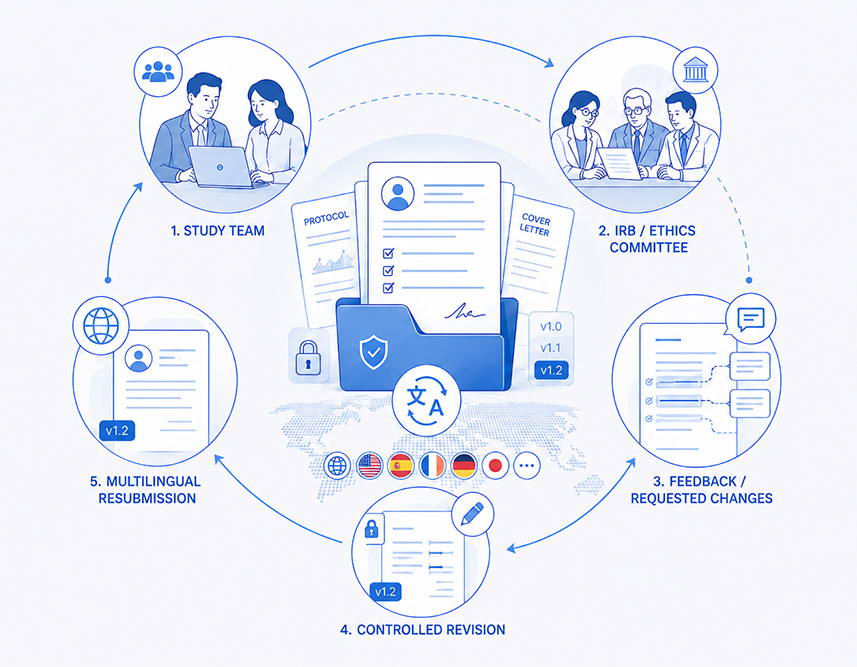
CONTROLLED REVIEW CYCLE
From Initial Submission to Controlled Multilingual Resubmission
Effective ethics committee translation workflows are designed for change from the beginning. Each step preserves the connection between study context, source versions, language decisions, and final deliverables.
01
Review the Source & Study Context
Confirm source versions, target languages, locales, study references, formatting requirements, and requested translation documentation.
02
Align Study Terminology
Establish consistent protocol, product, procedure, visit, risk, and participant terminology across the materials.
03
Translate & Review
Life sciences linguists translate participant- and committee-facing materials with the right balance of clarity, clinical precision, and completeness.
04
Prepare Multilingual Deliverables
Check formatting, identifiers, version information, tables, signature areas, and supporting translation documentation as appropriate.
05
Support the Local Review Cycle
Translated materials move through the applicable IRB, IEC, ethics committee, institution, site, or in-country review pathway.
06
Process Feedback & Source Changes
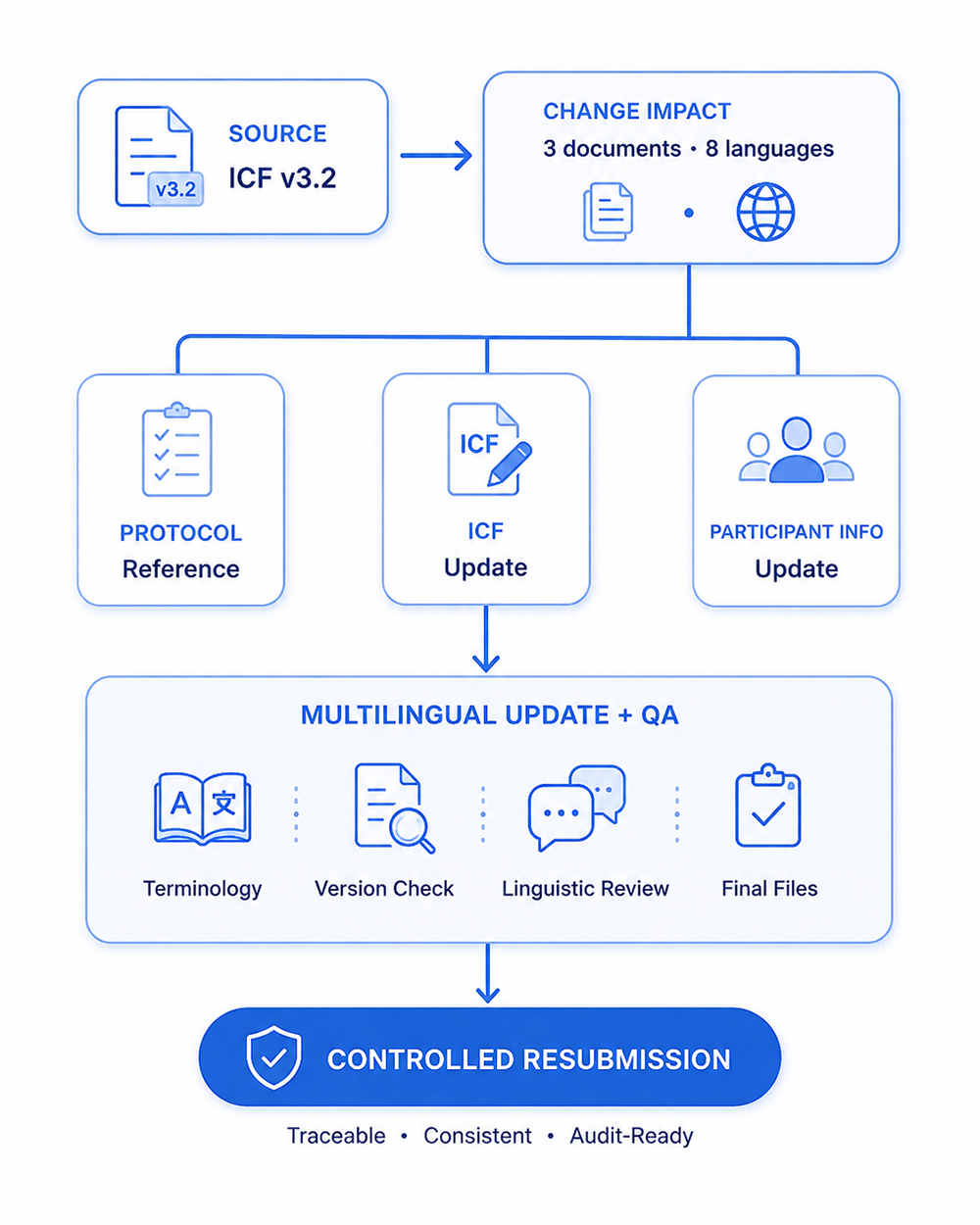
When reviewers request changes, work from the updated source and identify the multilingual documents affected by the revision.
07
Propagate Changes Across Languages
Update affected translations while preserving approved terminology, prior language decisions, and country-specific distinctions.
08
Complete QA & Prepare for Resubmission
Review revised files for linguistic accuracy, completeness, formatting, identifiers, and source-version alignment.
09
Maintain Future Amendments
Continue the same controlled workflow as protocols, consent materials, participant communications, and ethics documentation evolve.
SUBMISSION → LOCAL REVIEW → FEEDBACK → REVISION → CONTROLLED MULTILINGUAL RESUBMISSION