
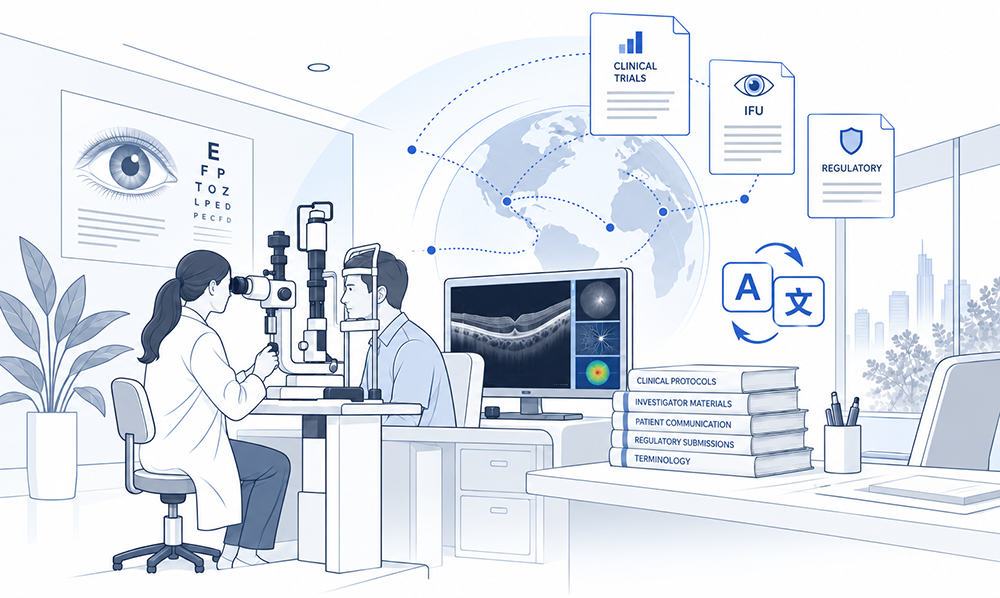
Specialized Translation for Global Ophthalmology Programs
Ophthalmology brings together specialized medicine, rapidly evolving therapeutics, sophisticated imaging technologies, clinical outcome measures, and patient experiences. Sesen helps maintain meaning and terminology across this interconnected content ecosystem.
Therapeutic Expertise
Translation Expertise Across Ophthalmic Diseases and Conditions
Support multilingual content across diseases affecting the retina, optic nerve, lens, cornea, ocular surface, and other structures involved in vision.
Retina & Vitreoretinal Disease
Age-related macular degeneration (AMD), geographic atrophy, diabetic retinopathy, diabetic macular edema, retinal vein occlusion, retinal detachment, inherited retinal diseases, and other retinal and macular disorders.
Glaucoma
Open-angle glaucoma, angle-closure glaucoma, ocular hypertension, and other glaucomatous conditions, with terminology spanning visual fields, treatment, diagnostics, and patient communication.
Cornea & Ocular Surface
Dry eye disease, corneal disorders, keratoconus, ocular surface disease, and content supporting corneal procedures and transplantation.
Cataract & Anterior Segment
Cataract, lens-related conditions, anterior segment disorders, intraocular lenses, surgical procedures, and postoperative care.
Inflammatory, Rare & Other Conditions
Uveitis, ocular inflammation, neuro-ophthalmic conditions, pediatric ophthalmology, rare eye diseases, and other specialized areas of vision care.
Clinical Development
Support Global Ophthalmology Clinical Trials
Ophthalmology studies can combine treatment protocols with visual acuity measurements, imaging, ocular examinations, visual-field assessments, clinical endpoints, and patient-reported measures of visual function.
Sesen helps sponsors, CROs, research organizations, and study teams maintain consistent terminology and meaning across countries and study sites.
Clinical Trial Translation ServicesPatient-Centered Measurement
Visual Function Across Languages
- Patient-reported outcomes (PROs)
- Clinical outcome assessments (COAs)
- Visual-function questionnaires
- Symptom assessments
- Quality-of-life instruments
- Patient diaries
- ePRO and eCOA content
- Treatment-experience measures
Preserve the Patient’s Experience of Vision Across Languages
How well a patient can read, navigate daily activities, recognize objects, drive, work, or perform other visually dependent tasks can be central to understanding treatment outcomes.
Our linguistic validation workflows can include forward translation, independent review, back translation, reconciliation, cross-language harmonization, cognitive debriefing, findings analysis, and final harmonization.
Linguistic Validation ServicesAdvanced Modalities
Translate the Next Generation of Ophthalmic Therapies
Support complex multilingual content as innovative ophthalmic treatments move from scientific development through clinical research, regulatory submission, medical affairs, commercialization, and patient communication.
Gene & Cell Therapies
Support advanced programs addressing inherited, retinal, and other ophthalmic diseases.
Biologics & Intravitreal Therapies
Keep clinical and treatment terminology aligned across specialized development content.
RNA & Sustained Delivery
Translate emerging therapeutic approaches and delivery technologies with controlled terminology.
Combination Products
Connect therapeutic, device, regulatory, and patient-facing content across the product lifecycle.
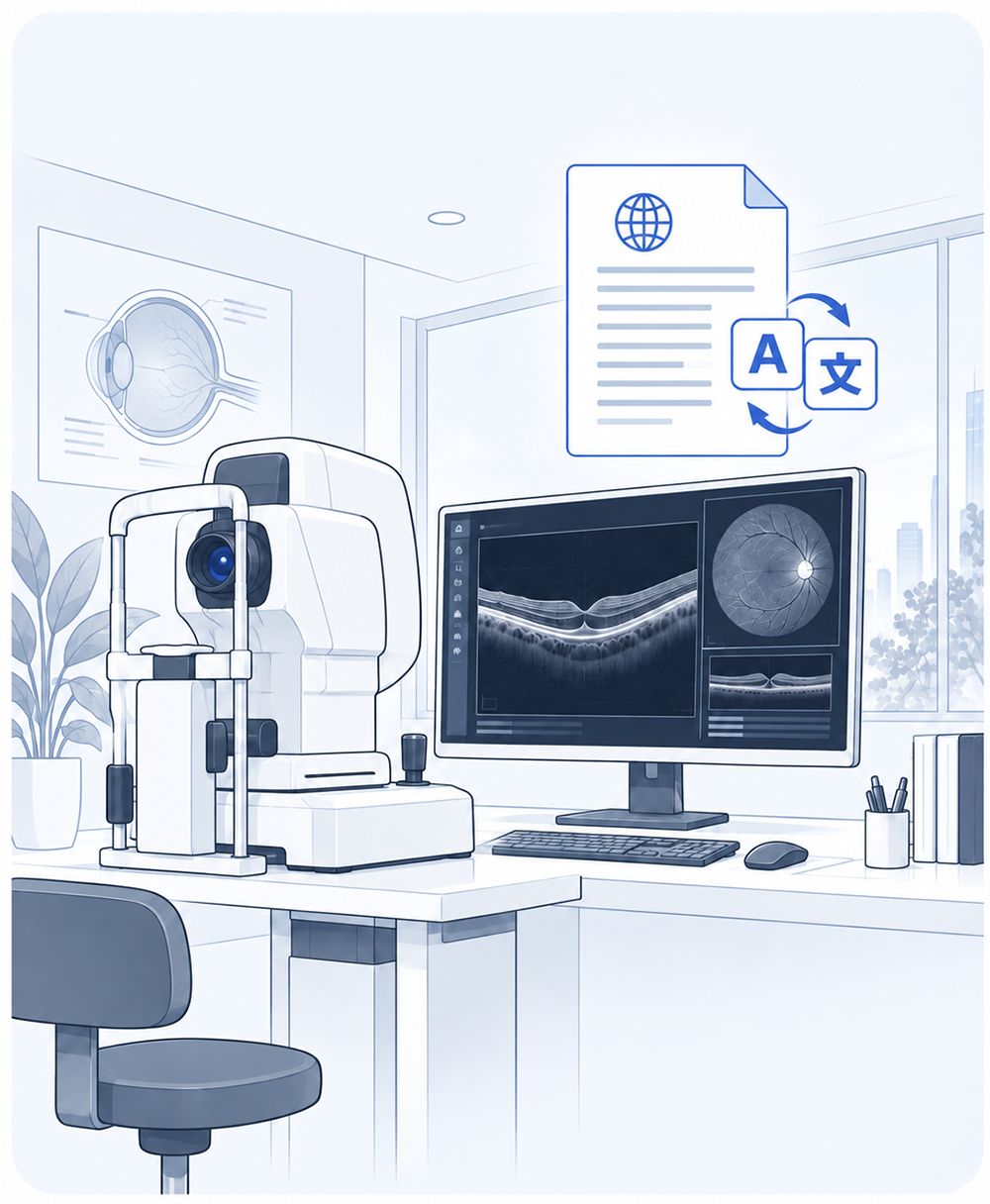
Translation for Ophthalmic Devices and Diagnostic Technologies
Sesen supports multilingual content for ophthalmic technologies used in diagnosis, imaging, treatment, surgery, and ongoing disease management, while device-specific documentation is addressed in greater depth on our dedicated device page.
- Optical coherence tomography systems
- Retinal imaging systems
- Ophthalmic cameras
- Visual-field testing systems
- Ophthalmic lasers
- Phacoemulsification equipment
- Intraocular lenses
- Device software and imaging interfaces
Regulatory Translation Across the Ophthalmology Product Lifecycle
Maintain terminology as information moves from clinical development into regulatory submissions and ultimately into product, healthcare professional, and patient communication.
- Regulatory submissions and correspondence
- Clinical and safety documentation
- Product information and labeling
- Technical and post-market documentation
Make Complex Eye-Care Information Clear for Patients
Patient-facing translations must preserve medical meaning while communicating unfamiliar anatomy, procedures, visual-function concepts, treatments, and device information clearly.
- Patient education and treatment instructions
- Clinical trial and informed consent content
- Surgical preparation and post-procedure instructions
- Patient support and digital health content
Terminology Governance
One Ophthalmology Vocabulary Across the Content Lifecycle
The same clinical concept can appear in dozens of documents created by different teams over several years. Sesen helps establish a consistent ophthalmology vocabulary across related content.
01
Clinical Protocols
02
Clinical Assessments
03
Regulatory Documentation
04
Product Information
05
Device & Software Content
06
Patient Communication
Approved terminology
Client glossaries
Translation memories
Product & study terminology
Cross-document linguistic assets
Automated terminology QA
AI-Enabled Ophthalmology Translation With Expert Human Review
Sesen combines AI-enabled translation technology with specialized human expertise to improve efficiency, terminology reuse, consistency, and quality control while maintaining appropriate human review for regulated and high-impact content.
The workflow is adapted to the content type, intended use, and quality requirements rather than applying the same level of automation to every document.
AI-Enabled Translation
Technology supports scalable multilingual production and intelligent reuse.
Specialized Human Review
Professional linguistic expertise remains central to regulated and high-impact content.
Terminology & Translation Memory
Approved language is reused consistently across related documents and updates.
Linguistic & Document QA
Automated and human checks support terminology, numbers, formatting, and content integrity.
Quality Controls for High-Stakes Ophthalmology Content
Structured multilingual processes help protect clinical, scientific, technical, regulatory, and patient meaning throughout production.
Specialized Linguistic Expertise
Match projects with linguistic resources appropriate to the subject matter and content type.
Terminology Management
Use approved terminology, glossaries, translation memories, and project-specific linguistic assets.
Independent Review
Apply independent linguistic review according to project and quality requirements.
Automated Quality Assurance
Identify potential inconsistencies involving terminology, numbers, formatting, omissions, and other issues.
Document & Formatting Quality
Review multilingual files for layout, formatting, and content integrity before delivery.
Traceable Multilingual Workflows
Manage revisions, linguistic assets, feedback, and updates throughout long-running programs.
Global Delivery
Scale Ophthalmology Content Across Languages and Markets
Centralized terminology, reusable linguistic assets, AI-enabled technology, and scalable production workflows help organizations expand from individual documents to complex global programs while maintaining consistency.
Whether you are translating one specialized ophthalmology document or coordinating content across dozens of markets, Sesen can build the multilingual workflow around your program.
Multinational clinical trials
Multi-country regulatory programs
Global therapeutic launches
Ophthalmic device releases
International patient programs
Medical affairs initiatives
Ongoing product updates
Large multilingual portfolios
Why Life Sciences Organizations Choose Sesen
Specialized expertise, scalable technology, and structured multilingual workflows for complex ophthalmology content.
Ophthalmology Translation Services FAQ
Ophthalmology translation is the specialized translation of clinical, scientific, regulatory, technical, and patient-facing content related to eye diseases, vision science, ophthalmic treatments, diagnostics, medical devices, and clinical research.
Sesen supports clinical trial protocols, investigator’s brochures, informed consent forms, regulatory documentation, clinical outcome assessments, PRO and eCOA content, scientific materials, patient education, IFUs, labeling, software content, training materials, and other ophthalmology-related content.
Yes. Sesen supports multinational ophthalmology studies with translation of protocols, informed consent, patient and investigator materials, clinical assessments, safety content, questionnaires, training materials, and other trial documentation.
Yes. Sesen supports translation and linguistic validation for patient-reported outcomes, clinical outcome assessments, visual-function questionnaires, patient diaries, ePRO/eCOA content, and other instruments used to understand symptoms, visual function, treatment experience, and quality of life.
Yes. Sesen supports multilingual content for ophthalmic diagnostic, imaging, surgical, and therapeutic devices. Device-focused programs can be supported through our dedicated Ophthalmic Device Translation Services.
Yes. Sesen provides translation solutions for advanced therapy programs, including gene and cell therapies being developed for retinal, inherited, and other ophthalmic diseases, spanning clinical, regulatory, scientific, and patient-facing content.
Sesen can use approved glossaries, terminology databases, translation memories, previous translations, and study- or product-specific linguistic assets, combined with automated QA and human review to help identify inconsistencies before delivery.
Sesen uses AI-enabled language technology as part of a broader multilingual workflow that can also include terminology management, translation memory, specialized linguists, independent review, and quality assurance. The workflow is adapted to the content type, intended use, and quality requirements.
Bring Your Ophthalmology Program to Global Markets
From multinational clinical studies and advanced retinal therapies to ophthalmic devices, regulatory submissions, clinical outcome assessments, and patient communication, Sesen helps organizations communicate specialized ophthalmology content accurately and consistently across languages.