Small, Geographically Dispersed Populations
A multinational rare-disease study may need many languages even when relatively few participants speak each one. Sesen helps keep terminology, versions, and study materials aligned across markets.

Why Rare Disease Is Different
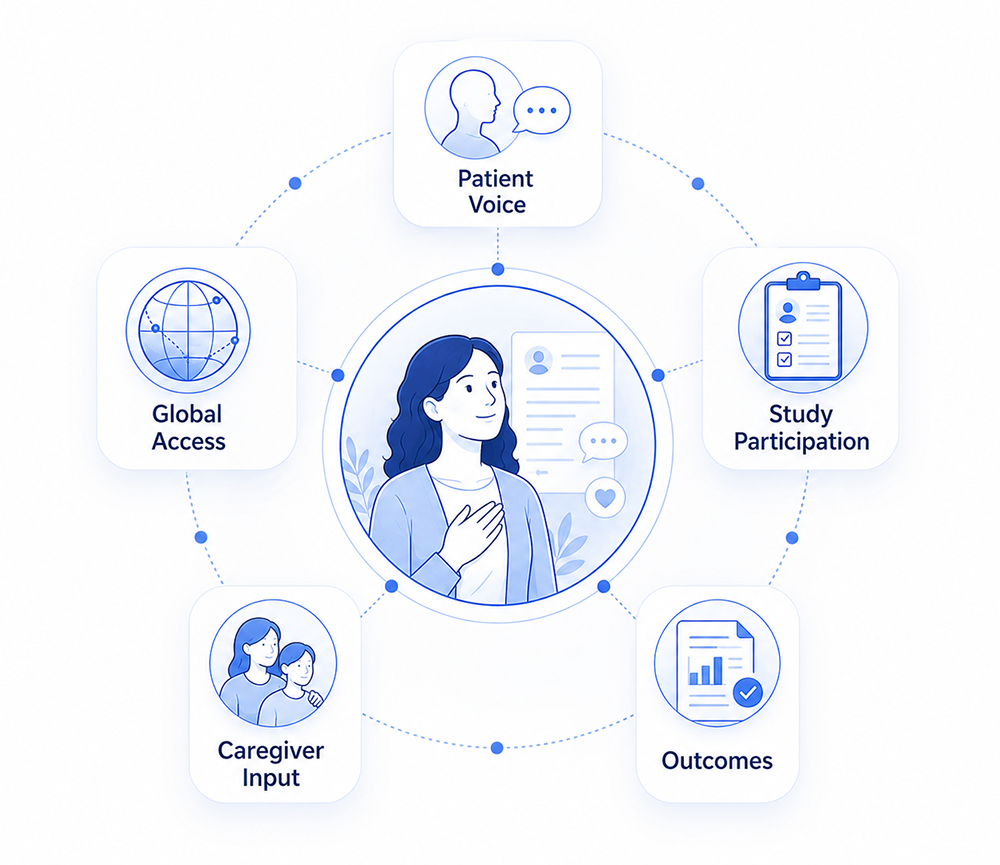
Rare-disease development is not simply conventional drug development involving fewer patients. Eligible participants may be distributed across many countries, disease terminology may still be evolving, endpoints may depend heavily on patient or caregiver reporting, and novel modalities can introduce new scientific concepts throughout the program. Every patient, endpoint, term, document, and language can carry greater importance within the overall evidence base.
A multinational rare-disease study may need many languages even when relatively few participants speak each one. Sesen helps keep terminology, versions, and study materials aligned across markets.
Genetic variants, biomarkers, molecular mechanisms, assays, endpoints, and investigational therapies require disciplined terminology management across scientific, clinical, regulatory, and patient-facing content.
Natural-history studies, registries, observational research, patient interviews, and related evidence may play an unusually important role in understanding disease progression and meaningful outcomes.
Patient, parent, caregiver, and advocacy perspectives can be central to understanding symptoms, functioning, disease burden, treatment experience, and outcomes that matter.
Assent, caregiver communication, observer-reported measures, and age-appropriate materials require language that is understandable to the intended respondent while remaining clinically aligned.
Gene therapy, genome editing, RNA therapeutics, antisense oligonucleotides, precision medicine, and other advanced approaches introduce specialized terminology across the development lifecycle.
Rare-disease content does not exist in isolation. Sesen helps connect terminology, patient language, endpoint concepts, study references, and regulatory content as the program advances.
Disease understanding, registries, patient research, scientific evidence.
Protocols, consent, site content, data collection, amendments.
Recruitment, education, participation, retention, digital communication.
COA, eCOA, PRO, ObsRO, ClinRO, PerfO, patient diaries.
Dossiers, CTD/eCTD, CMC, authority responses, country content.
Labeling, safety, product information, training, ongoing updates.
One development program. Multiple audiences. Many languages. Controlled multilingual continuity.
Natural History & Research
Rare-disease development often begins with understanding the disease itself. Natural-history studies, registries, observational research, genomic studies, qualitative interviews, and other evidence sources can help characterize progression, meaningful outcomes, and patient subpopulations.
Genomics & Gene Therapy Translation ServicesProtocols, study materials, investigator content, participant communication, questionnaires, data-collection tools, study reports, and supporting documentation.
Patient enrollment, registry questionnaires, longitudinal follow-up, digital interfaces, patient communication, and recurring data-collection content.
Research reports, manuscripts, presentations, genetics, molecular diagnostics, genomic sequencing, biomarkers, assays, variants, and related scientific terminology.
Interview guides, qualitative materials, transcripts, caregiver research, patient research, discussion guides, and multilingual research summaries.
A rare-disease study may enroll relatively few patients yet require complex coordination across specialist sites, countries, language variants, patient populations, outcome instruments, and recurring study updates.
Connected study support: Sesen can align terminology and references across protocols, investigator materials, ICFs, ethics content, CRFs/eCRFs, patient materials, and recurring amendments so related multilingual study content remains connected rather than being managed as isolated files.
Patient & Caregiver Communication
Rare-disease patients and caregivers often develop deep knowledge of their condition through lived experience. Effective multilingual communication should respect that expertise while making complex clinical and scientific information understandable for the intended audience.
Sesen supports recruitment websites and materials, study explanations, informed consent and assent, visit instructions, treatment and procedure education, caregiver guides, observer instructions, study updates, reminders, patient portals, eConsent environments, eCOA/ePRO systems, and other patient-facing content used throughout site-based, hybrid, and decentralized studies.
The objective is not simply to translate the words. It is to preserve meaning, usability, and patient understanding in context while keeping the content aligned with the underlying clinical concepts.
Patient Engagement Translation ServicesCOA, eCOA & Linguistic Validation
In a rare-disease study, every participant can contribute materially to a relatively small evidence base. For clinical outcome assessments, linguistic accuracy alone is not enough: symptoms, response scales, recall periods, instructions, functional concepts, and digital implementation must preserve the intended meaning for each target population.
Identify concepts, instructions, response structures, cultural considerations, and multilingual risks before translation.
Develop and reconcile target-language versions that preserve intended meaning and appropriate respondent language.
Review concept shifts, resolve queries, and align key terminology across languages where the methodology requires it.
Evaluate comprehension and conceptual equivalence with representative patients or caregivers when required by the validation plan.
Support in-country review, screenshot and in-context QA, proofreading, version control, and validation documentation.
Rare Disease in Practice
A global biopharmaceutical sponsor engaged Sesen to support cognitive debriefing and linguistic validation of a patient-reported outcome instrument for a Phase III hereditary angioedema study.
The program included adolescent and adult populations across 22 languages. Sesen supported age-appropriate cognitive interviewing, cross-cultural review, reconciliation, documentation, and finalization of multilingual instrument versions using native-language resources and a flexible mix of virtual and in-person patient interviews.
View the HAE Case StudyAdvanced & Individualized Therapies
Gene replacement, genome editing, RNA-targeted medicines, precision approaches, and other advanced therapies are creating new opportunities—and new language challenges across scientific, CMC, clinical, regulatory, and patient-facing content.
Vectors, mechanisms, preclinical content, clinical documentation, CMC, long-term follow-up, patient communication, and regulatory content.
Genomics & Gene Therapy Translation ServicesTarget genes, editing mechanisms, delivery systems, assays, off-target analysis, manufacturing, nonclinical evaluation, and clinical monitoring.
Genomics & Gene Therapy Translation ServicesAntisense oligonucleotides and other RNA-based approaches with specialized scientific, CMC, clinical, patient, and regulatory terminology.
mRNA Translation ServicesGenomic testing, biomarkers, molecular diagnostics, patient selection, molecular subtypes, and related clinical research content.
Genomics & Gene Therapy Translation ServicesScientific, manufacturing, clinical, training, patient-facing, and regulatory documentation appropriate to the therapy and development stage.
Regulatory & Orphan-Drug Documentation
Sesen translates and manages multilingual documentation supporting rare-disease and orphan-drug programs while sponsors and their regulatory experts determine development strategy, designations, submission pathways, and approval plans.
Investigational applications, clinical trial applications, marketing applications, CTD/eCTD content, clinical, nonclinical, CMC, scientific, and country-specific documentation.
Regulatory Submission Translation ServicesMultilingual content across Modules 1–5 with terminology management, reference alignment, translation memory, controlled revisions, and professional QA.
CTD & eCTD Translation ServicesDrug substance, drug product, manufacturing processes, specifications, analytical methods, validation, stability, control strategies, and related quality content.
CMC Document Translation ServicesCSRs, narratives, tables, listings, figures, appendices, summaries, and related clinical evidence aligned with study terminology and endpoints.
Clinical Study Report Translation ServicesAgency questions, information requests, sponsor responses, meeting materials, supporting evidence, updated documents, and country-specific correspondence.
Regulatory Translation ServicesPrescribing information, patient information, package leaflets, labels, safety statements, pharmacovigilance content, variations, and post-approval updates.
Sesen supports multilingual clinical, scientific, regulatory, patient-facing, CMC, safety, labeling, and lifecycle documentation associated with orphan-drug programs. Our language-focused workflows help development teams communicate specialized content accurately and consistently across markets while integrating with sponsor-led regulatory and development processes.
Regulatory Translation Services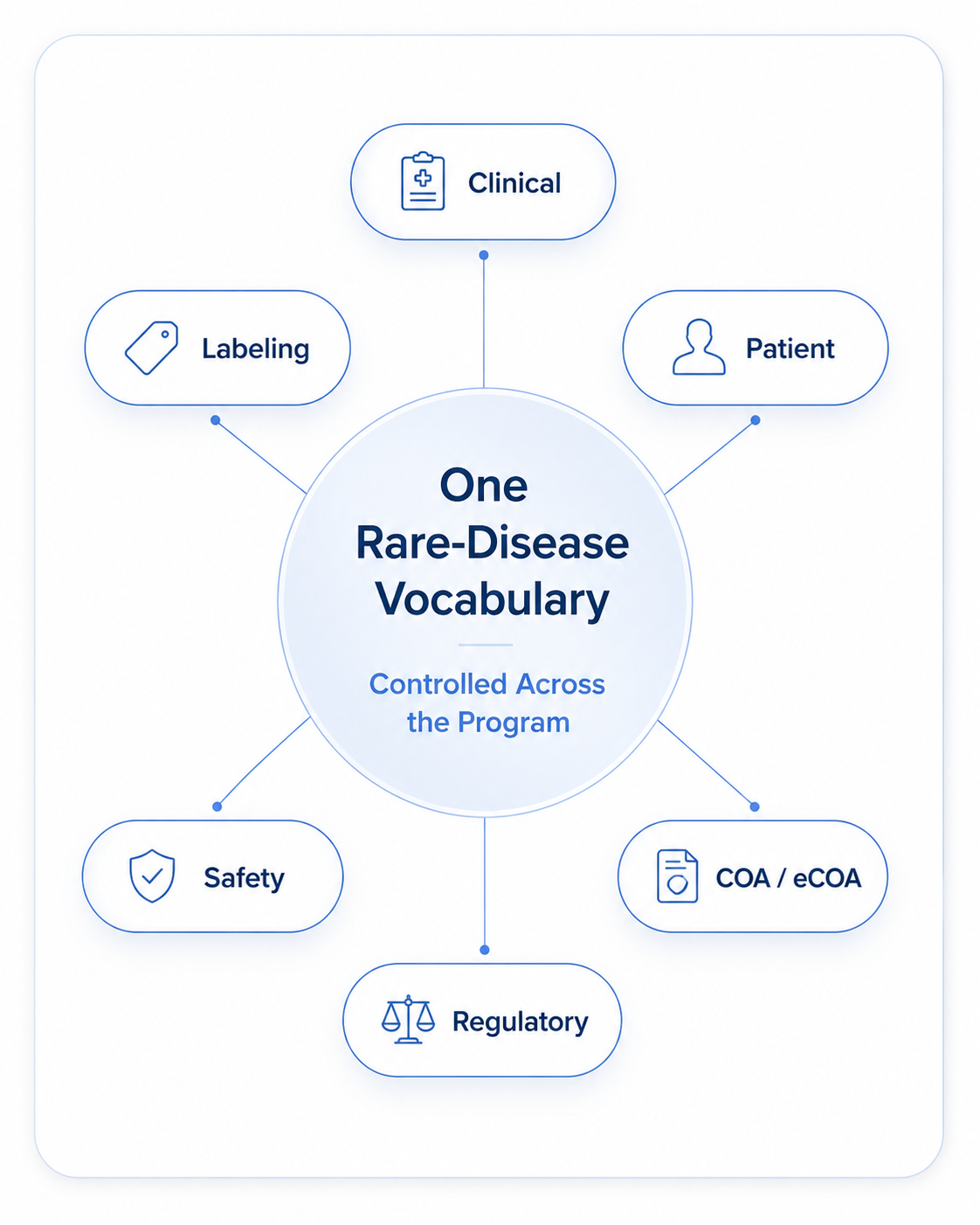
Terminology Governance
A disease name, genotype, biomarker, symptom, endpoint, investigational product term, procedure, or safety concept may appear across dozens of documents and audiences. Sesen establishes multilingual terminology assets that can evolve with the program.
Artificial intelligence can help rare-disease translation teams identify inconsistencies, reuse approved language, and manage multilingual information more efficiently. It does not remove the need for expert human judgment.
For specialized rare-disease content, technology is most valuable when it supports qualified linguists and reviewers who understand the scientific, clinical, patient, and regulatory context.
Quality, Security & Traceability
Rare-disease programs may involve sensitive patient information, proprietary scientific research, confidential development plans, and regulated documentation. Sesen applies structured quality and information-management controls appropriate for life sciences translation.
Projects are assigned to linguists with the language proficiency and subject-matter experience appropriate to the content, audience, therapeutic area, and workflow.
Where required, translations undergo independent linguistic review and additional subject-matter or in-country review according to project specifications.
Project glossaries, reference material, sponsor preferences, and approved terminology help keep related multilingual content consistent.
Quality checks can cover terminology, completeness, numbers, measurements, identifiers, cross-references, formatting, tags, and language-specific conventions.
Controlled updates, translation-memory records, reviewer feedback, issue tracking, and project documentation support content that changes through development.
Secure cloud infrastructure and controlled workflows support the handling of sensitive clinical, scientific, patient, and regulated content.
Different functions encounter different multilingual challenges during development. Sesen can support individual projects or broader programs across the rare-disease ecosystem.
Coordinate clinical, regulatory, scientific, patient-facing, safety, and lifecycle translation through one specialized life sciences partner.
Scale multilingual programs without building separate language workflows for every market, study, document type, or therapeutic modality.
Manage protocols, consent, site content, patient materials, study updates, amendments, and operational documentation across global studies.
Maintain terminology and content continuity across dossiers, authority responses, CMC, country submissions, labeling, and lifecycle updates.
Support translation, cultural adaptation, linguistic validation, cognitive debriefing, harmonization, eCOA implementation, and documentation.
Communicate clearly across recruitment, education, consent, participation, retention, patient support, and caregiver engagement.
Coordinate multilingual content across sponsors, countries, investigators, sites, patients, reviewers, and technology providers.
CRO Translation ServicesSupport multilingual assessments, interfaces, patient instructions, screenshots, device environments, and validation workflows.
A rare-disease program may involve fewer patients than a large therapeutic-area study, but each participant can sit within a complex network of patient voice, clinical evidence, endpoints, scientific knowledge, and regulatory documentation.
Sesen helps connect those information streams through professional linguistic expertise, controlled terminology, reusable language assets, structured QA, responsible technology, and centralized multilingual program management.
Answers to common questions about multilingual rare-disease research, clinical trials, linguistic validation, advanced therapies, terminology, and global delivery.
Rare disease translation services provide specialized multilingual support for the clinical, scientific, regulatory, patient-facing, endpoint, and digital content used in rare and ultra-rare disease research and therapeutic development. Sesen supports interconnected content such as natural-history studies, clinical trial documents, informed consent, COAs and eCOAs, regulatory submissions, CMC, safety, labeling, and advanced-therapy documentation.
Rare-disease programs can involve small and geographically dispersed patient populations, highly specialized or evolving terminology, limited natural-history information, disease-specific endpoints, significant patient and caregiver involvement, pediatric populations, and novel therapeutic modalities. Sesen approaches these requirements as a connected multilingual program rather than a collection of unrelated files.
Yes. Sesen provides language services for clinical, scientific, patient-facing, regulatory, CMC, safety, labeling, and other documentation associated with orphan-drug and rare-disease development. Sesen's role is focused on multilingual content and communication; development strategy, designation decisions, and regulatory pathways remain the responsibility of sponsors and their regulatory experts.
Yes. Sesen supports protocols, amendments, investigator's brochures, informed consent forms, assent forms, IRB and ethics committee materials, CRFs/eCRFs, site manuals, laboratory and pharmacy manuals, training content, patient materials, study reports, safety communication, and other study documentation.
Yes. Sesen supports linguistic validation for PRO, ePRO, ClinRO, ObsRO, PerfO, eCOA, patient diaries, symptom scales, questionnaires, and other clinical outcome instruments. Depending on project requirements, services can include forward translation, reconciliation, back translation, harmonization, cognitive debriefing, in-country review, screenshot review, proofreading, and validation documentation.
Yes. Sesen translates pediatric assent forms, parent and guardian consent, patient information, caregiver materials, observer-reported assessments, questionnaires, and other age-sensitive content. Language can be adapted for the intended respondent while remaining aligned with the underlying clinical concepts.
Yes. Sesen supports multilingual scientific, clinical, CMC, patient-facing, regulatory, and related documentation for genomics, gene therapy, genome editing, RNA-based therapeutics, mRNA technologies, and other advanced treatment programs.
Sesen can create program-specific terminology resources and translation memories covering disease terminology, genetic variants, biomarkers, mechanisms of action, endpoints, procedures, treatment language, and sponsor-approved wording. These assets can be reused and updated across clinical, regulatory, safety, labeling, and patient-facing content.
AI can support selected translation and quality-assurance tasks such as terminology checking, completeness review, reference comparison, repeated-content analysis, translation-memory leverage, and identification of potential inconsistencies. For specialized life sciences content, Sesen combines these technologies with qualified human linguists and reviewers who evaluate scientific meaning, clinical context, patient comprehension, cultural appropriateness, and final linguistic quality.
Sesen supports life sciences translation and localization in 150+ languages, including country-specific language variants required for multinational clinical trials, regulatory programs, patient communication, and global product deployment.
Whether you are preparing a natural-history study, launching a multinational clinical trial, validating a rare-disease COA, advancing a gene or RNA-based therapy, responding to a health authority, or managing multilingual content across the product lifecycle, Team Sesen is ready to help.